
Fish Species
BASS
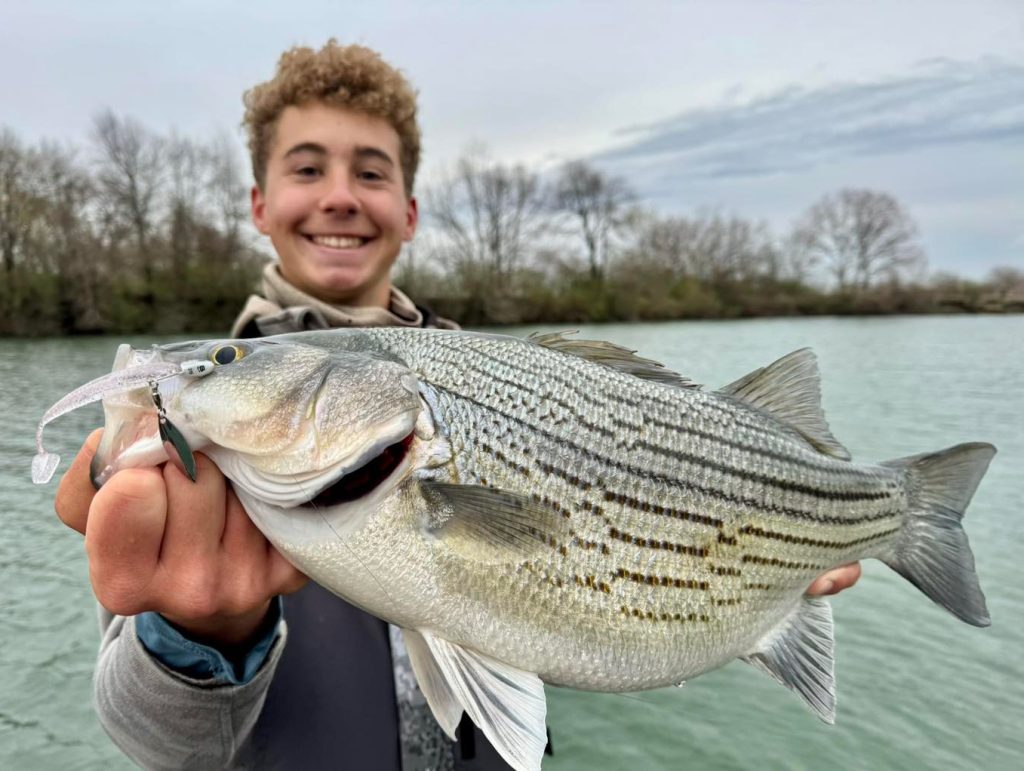
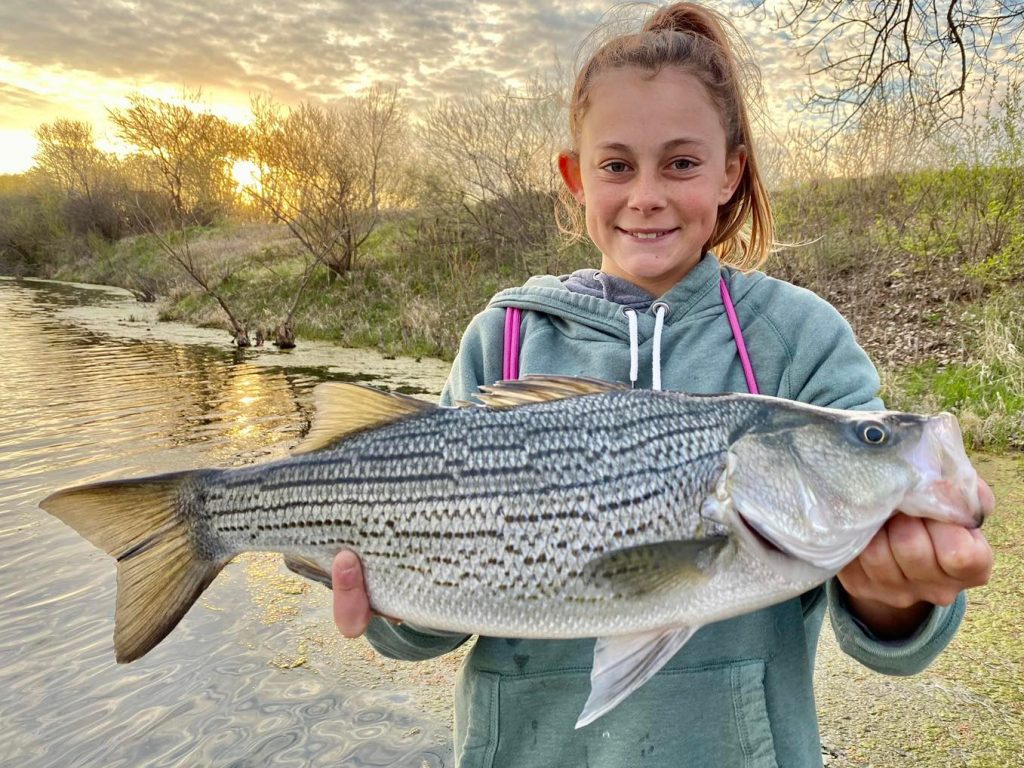
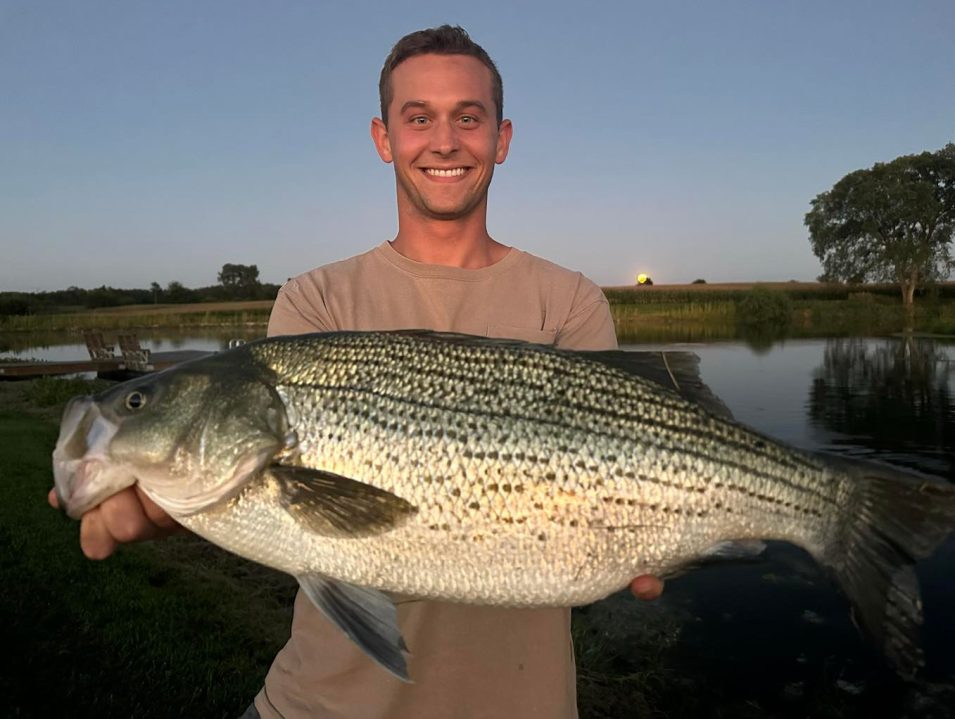
Hybrid Striped Bass
Scientific name: Morone chrysops × Morone saxatilis
Stocking availability: Spring, Summer, Early Fall
Typical Stocking Rates: 10–50 per acre, depending on forage availability and management goals.
Why Hybrid Striped Bass?
•Incredible fighting fish that anglers love.
•Fast growth and strong predator for open-water forage species.
•They taste great! Just cut out the red vein down the middle of the fillet.
•Provide a unique fishing experience compared to traditional pond species. Closest thing to saltwater fishing with powerful drag screaming runs.
Management Considerations
•Best suited for ponds and lakes with strong forage bases like Shad or supplemental feeding programs.
•Typically managed as a put-and-take species, since reproduction is minimal in ponds.
•Respond well to supplemental feeding programs, which can significantly increase growth.
•Provide an excellent supplemental predator without heavily competing with largemouth bass.
•Can be used as the exclusive predator as well with specialty ponds/ management plans.
Fun & Interesting Facts
•Hybrid Striped Bass are a cross between White Bass and Striped Bass, combining the hard-fighting power of both species.
•They are one of the hardest fighting freshwater fish, often making long, powerful runs when hooked.
•Unlike largemouth bass, they are open-water predators that frequently roam and school while chasing baitfish.
•They are extremely efficient at feeding on shad, shiners, and other schooling forage species, only limited by the small size of their mouth.
•Hybrid Stripers grow quickly and can reach 5–10 pounds in ponds and small lakes, with larger fish possible.
•They have excellent eyesight and speed, making them deadly predators on baitfish in open water. This also makes them smart, too.
•Because they rarely reproduce in ponds, populations remain highly manageable through stocking and harvest.
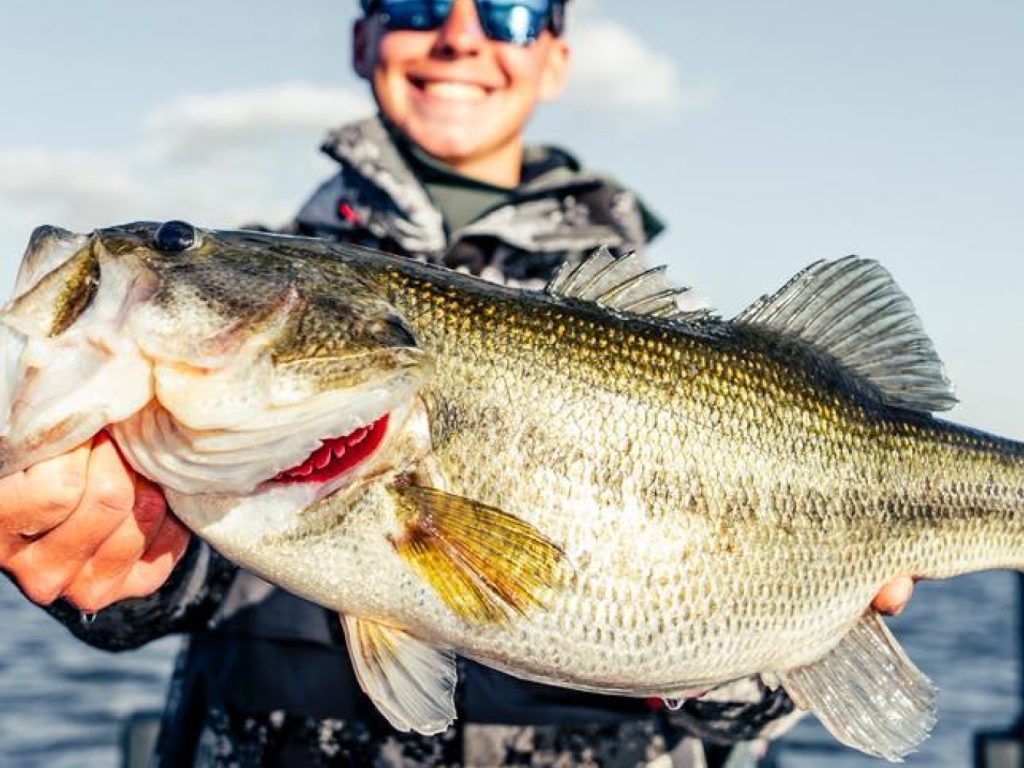
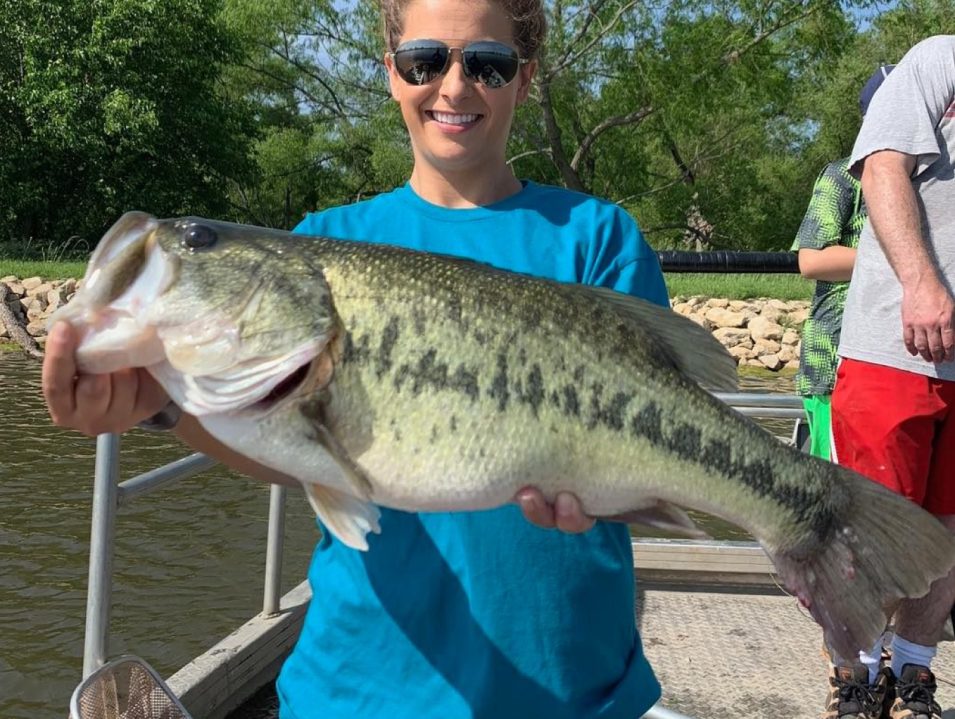
Largemouth Bass
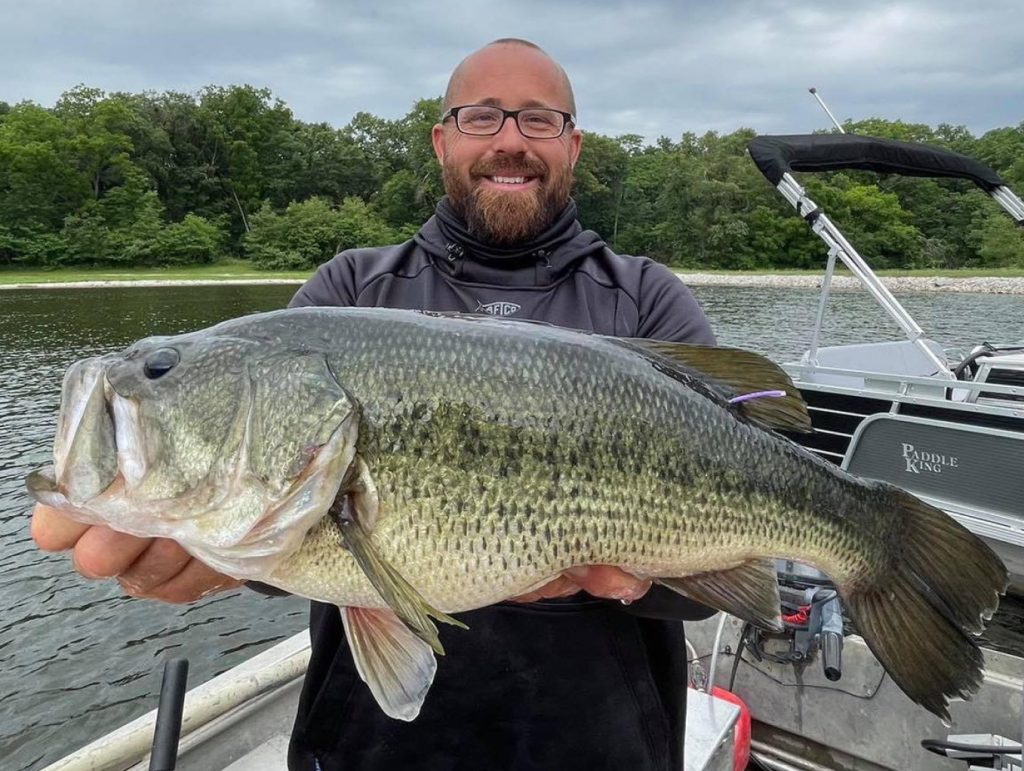
Scientific name: Micropterus salmoides
Stocking availability: March 1st – December 15th
Typical Stocking Rates: 50–200 per acre in new ponds stocked with bluegill and other forage species. Supplemental stockings depend on management goals, genetic diversity, and selective harvest programs.
Why Largemouth Bass?
•The most popular freshwater sportfish in North America.
•Provide exciting fishing and strong fights.
•Essential predator for maintaining balanced pond ecosystems.
•Key species for creating trophy fishing opportunities.
•Anyone can catch a bass regardless of angling abilities.
Management Considerations
•Bass growth is directly tied to forage availability for every stage of a bass life.
•Harvest strategy strongly influences population structure and size potential. Bass routinely out eat their food chain and over reproduce in private ponds.
•Habitat diversity (cover, spawning areas, depth variation, aquatic vegetation) greatly improves fishing success.
•Balanced predator-prey relationships with great water quality are the key to producing quality fisheries. Basically limit stress is key!
•Bass genetics matter tremendously. Your strain of fish must have the genetic propensity to grow large if you want trophy bass.
Fun & Interesting Facts
•Largemouth Bass are the top predator in most lake and pond ecosystems, playing a critical role in keeping bluegill and other forage fish populations balanced.
•They can expand their mouth to nearly the size of their body, allowing them to swallow surprisingly large prey.
•Bass are extremely structure-oriented, often relating to submerged trees, weed edges, docks, and drop-offs.
•They are ambush predators capable of short bursts of speed over 25 mph when striking prey.
•Largemouth Bass spawn when water temperatures reach 60–70°F, typically in late spring in the Midwest.
•Males build and guard the nest in shallow water until the fry disperse, aggressively protecting them from predators.
•Female largemouth commonly reach 3–5 pounds, and in some cases even larger 6-8 lbs. Males typically only grow 1-2 lbs in ponds.
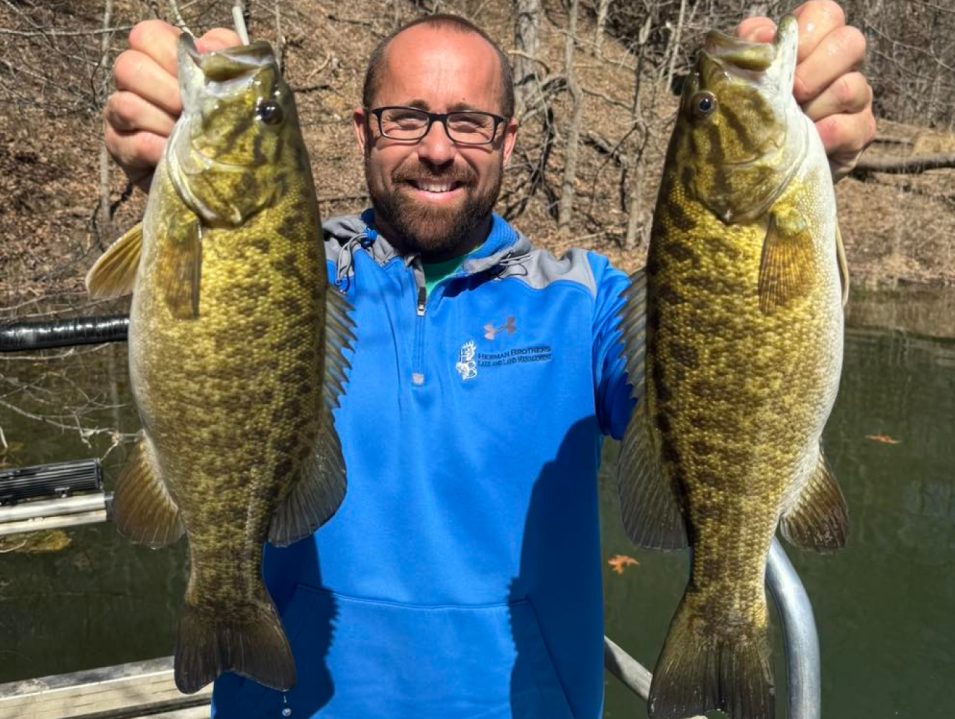
Smallmouth Bass
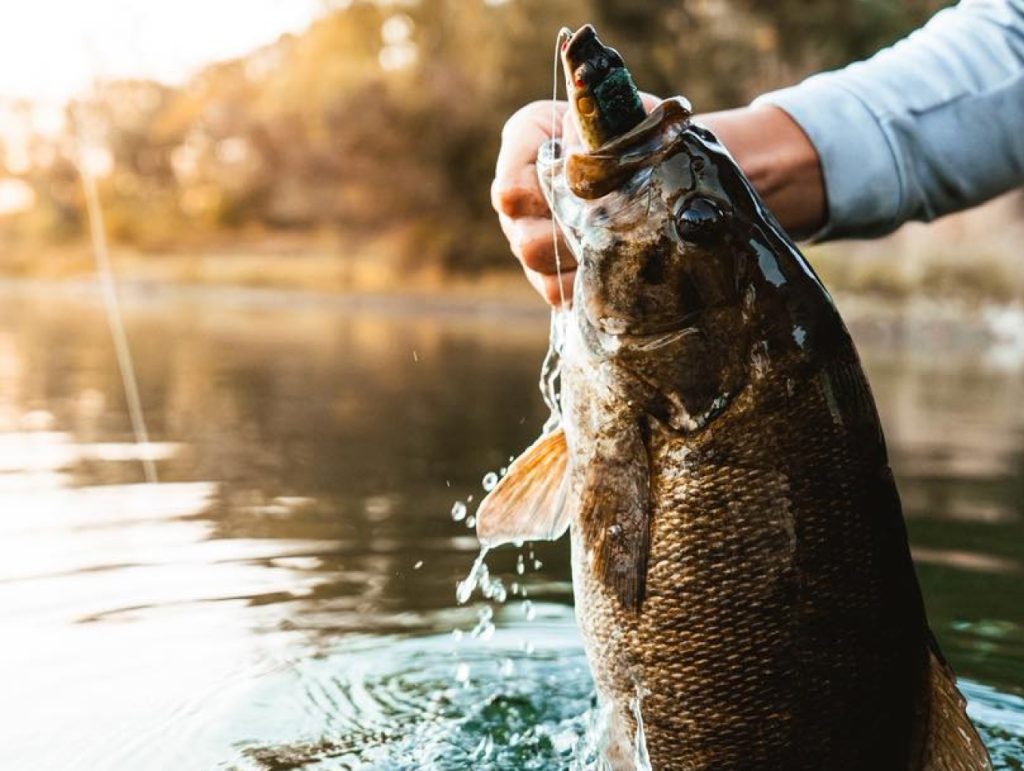
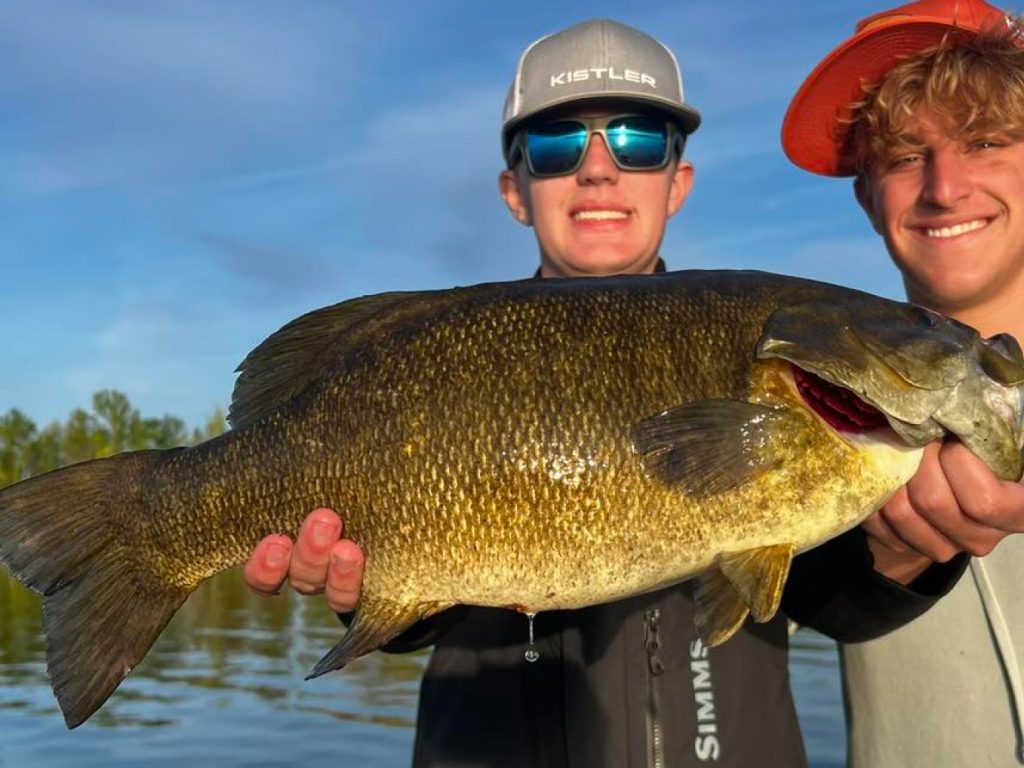
Scientific name: Micropterus dolomieu
Stocking availability: Fall Only (sell out every year)
Typical Stocking Rates: 15–100 per acre, depending on forage base, habitat, and management goals.
Why Smallmouth Bass?
•Hard-fighting sportfish with incredible angling appeal.
•They are famous for their acrobatic jumps when hooked, making them a favorite among anglers.
•Thrive in clear lakes with rocky habitat.
•Provide a unique fishing experience compared to largemouth bass.
•Excellent addition to properly designed multi-species fisheries.
Management Considerations
•Prefer clear water and rocky spawning areas.
•Often thrive with forage species like crayfish, shiners, redears, and perch.
•Generally do best in lakes with less dense vegetation than typical largemouth bass ponds.
•Careful planning of forage base and habitat is key for long-term success.
•They will take to supplemental feeding programs making it possible to implement into existing largemouth populations. But the absence of largemouth is preferred.
Fun & Interesting Facts
•Smallmouth Bass are often called “bronze backs” because of their beautiful bronze-green coloration.
•They are widely considered one of the hardest fighting and acrobatic freshwater fish pound-for-pound.
•Unlike largemouth bass, smallmouth prefer clearer water, rock, gravel, and harder bottoms rather than heavy vegetation.
•They commonly inhabit points, rock piles, drop-offs, and current areas in lakes and rivers.
•Smallmouth Bass spawn when water temperatures reach 60–65°F, with males building nests on gravel or rocky bottoms.
•Males aggressively guard eggs and fry until they disperse, increasing survival rates.
•In ponds and lakes they commonly reach 2–4 pounds, while larger fish are possible.
•Smallmouth are extremely visual feeders and often strike crayfish, minnows, and baitfish near the bottom.
BLUEGILL
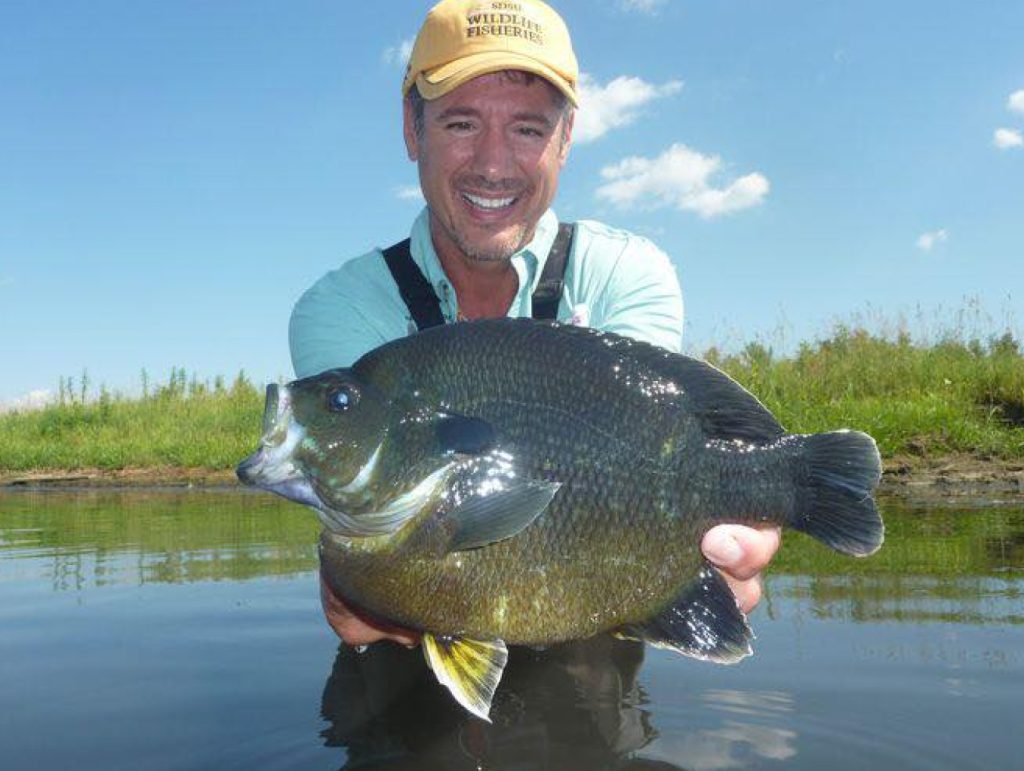
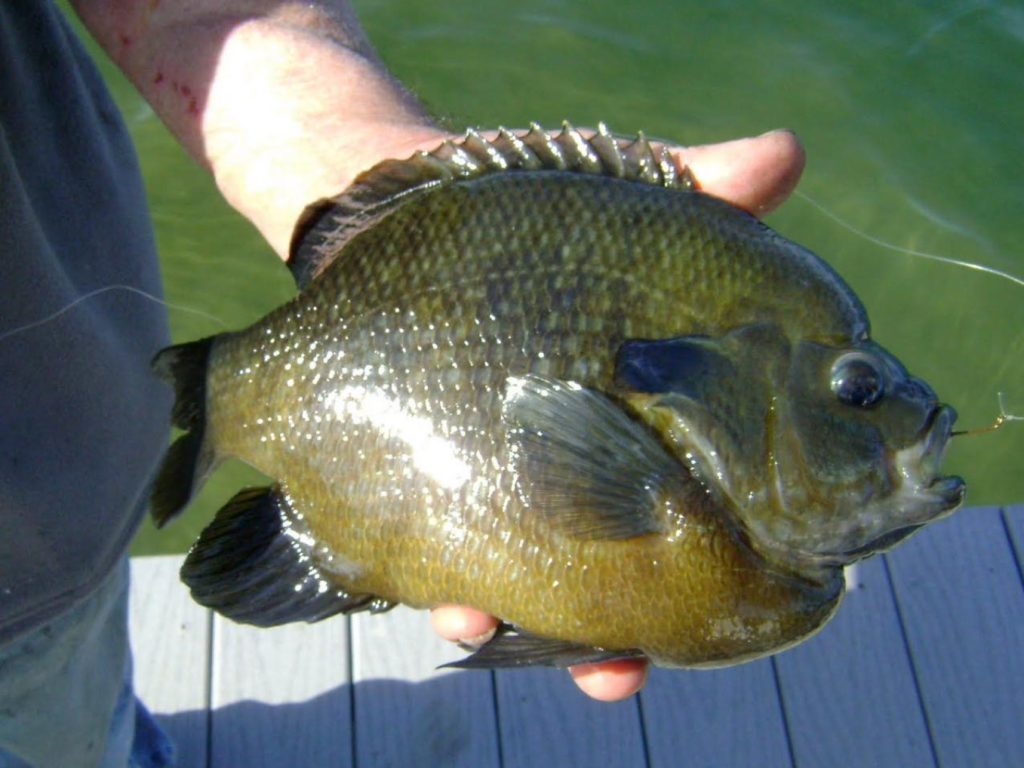
Bluegill
Scientific name: Lepomis macrochirus
Stocking availability: March 1st – December 15th
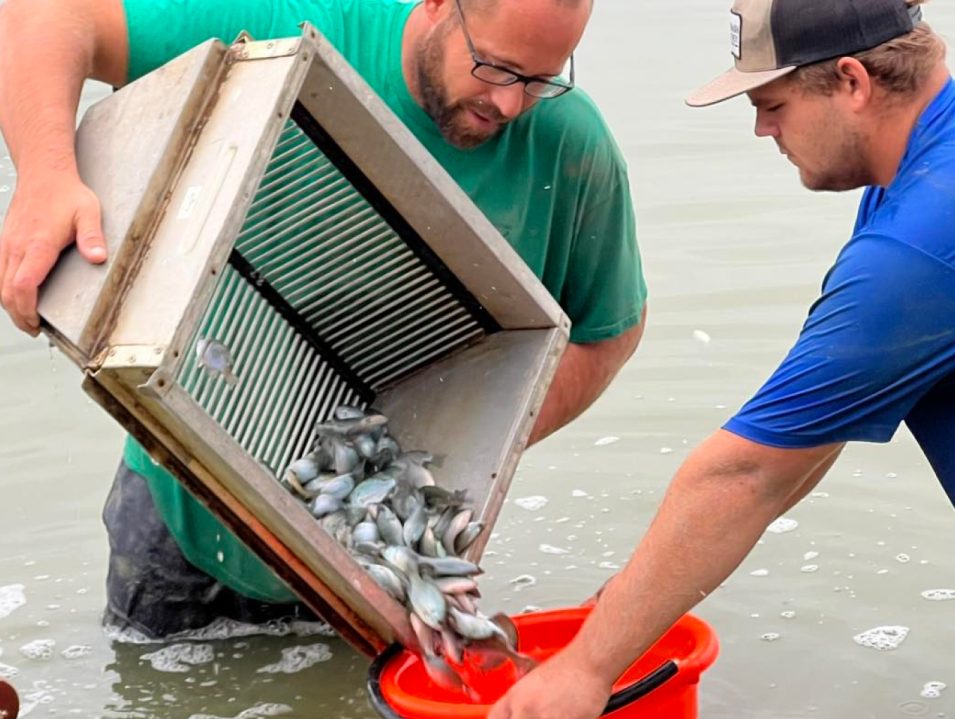
Typical Stocking Rates: 200–3,000 per acre based on goals and management strategy. We stock bluegill as forage to feed bass directly but we also help manage for trophy bluegill fisheries with much lower stocking numbers. Supplemental stockings vary based on management goals and harvest strategy.
Why Bluegill?
•Outstanding for kids and beginners — high catch rates and willing biters.
•Critical forage fish that fuels bass growth.
•Excellent table fare.
•Provide nearly constant fishing action throughout the warm months and thru the ice in winter!
•Trophy bluegill truly are magnificent and sought after fish!
Management Considerations
•Require proper predation to prevent stunting.
•Harvest strategy determines size structure — what you remove matters.
•Habitat diversity (spawning areas, structure, depths, feeding zones) dramatically impacts growth/reproduction.
•Genetics, nutrition, and population balance all work together if trophy bluegill are the goal.
Fun & Interesting Facts
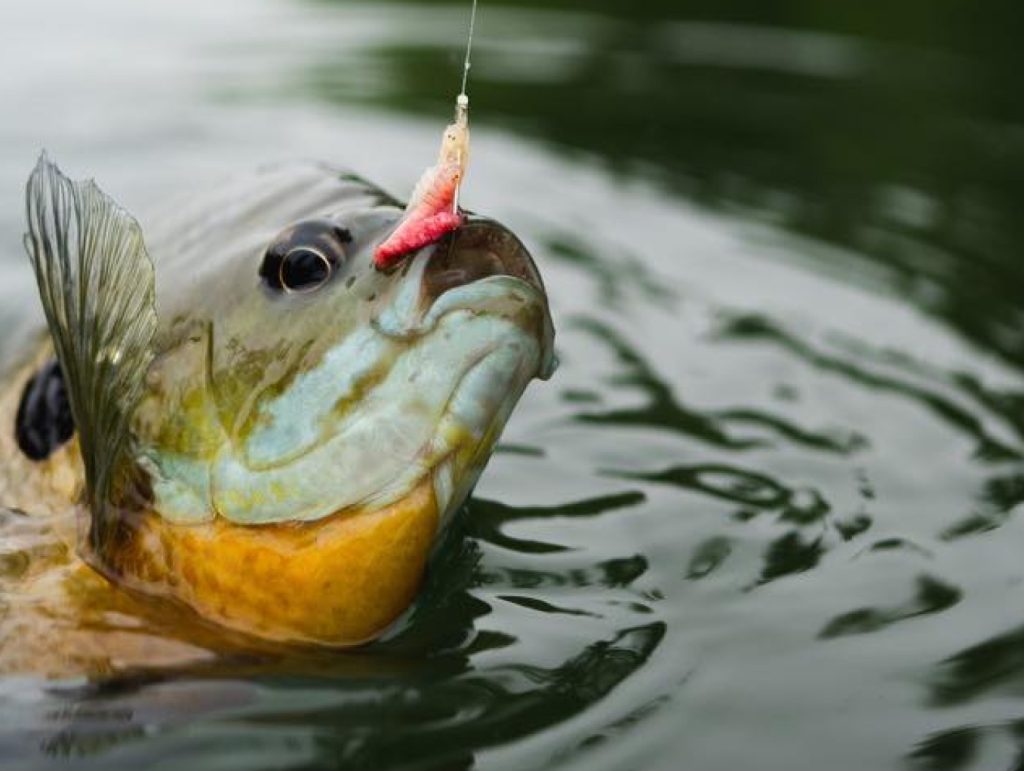
•Bluegill are the backbone of most pond ecosystems — the primary forage base for largemouth bass.
•They spawn multiple times per year when water temps reach 67–80°F, typically May through August in the Midwest.
•Males build saucer-shaped nests in colonies, often called “bluegill beds,” in 1–4 feet of water. Males do all the housework and parenting, females just lay the eggs.
•A single female can lay 10,000–60,000 eggs per spawn — and she may spawn several times each season.
•Males aggressively guard the nest until fry swim off, which increases survival compared to species that don’t guard eggs.
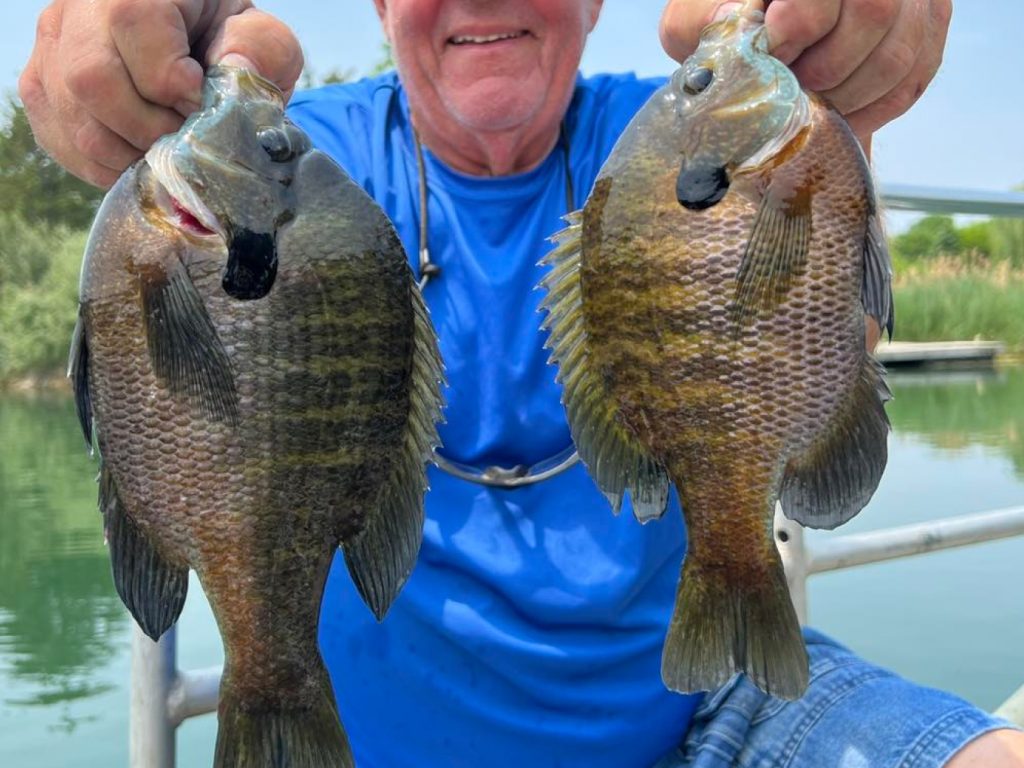
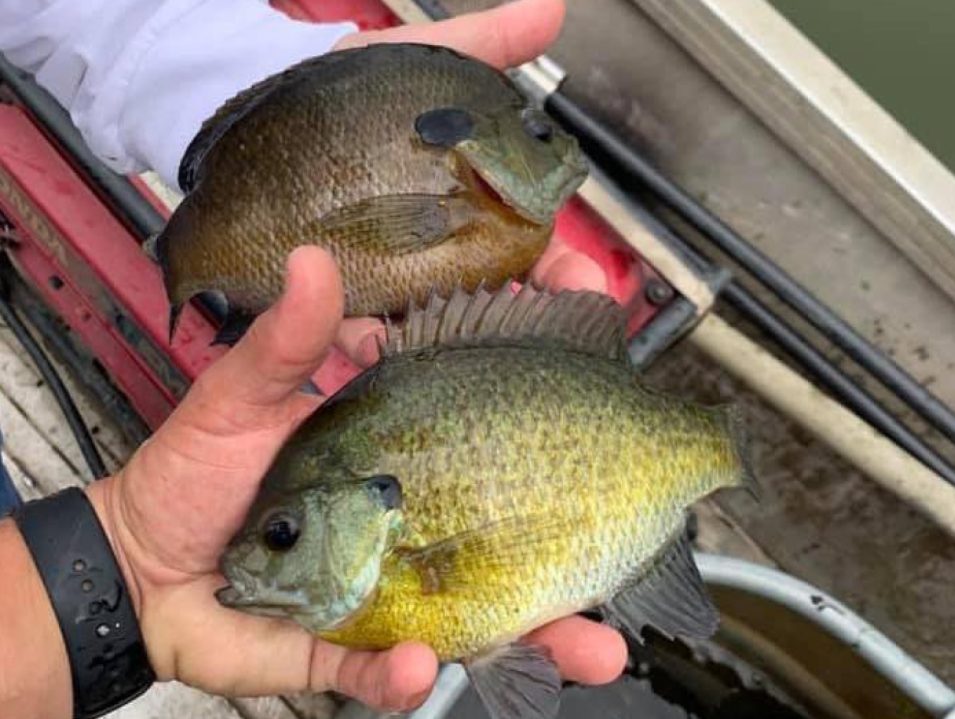
•They can grow 8–10 inches in balanced systems — and with intentional management, true 1-pound (and even 2-pound) bluegill management plans are now possible.
•They start life feeding on zooplankton, then shift to insects, larvae, and small aquatic organisms. Basically they will eat anything only limited by the size of their small mouths.
Hybrid Bluegill
Scientific name: Lepomis macrochirus × Lepomis cyanellus
Stocking availability: March 1st – December 15th
Typical Stocking Rates: 100–2000 per acre, depending on goals. Often stocked with hybrid striped bass or channel catfish in smaller ponds for fast action and controlled reproduction.
Why Hybrid Bluegill?
•Fast growth and quick fishing action.
•Great tasting and reach harvest size quickly
•Excellent choice for smaller ponds where bluegill overpopulation is a concern.
•Great for kids, family ponds, fishing derbies, and easy fishing.
•Very responsive to feeding programs.
Management Considerations
•Limited reproduction means periodic restocking is required.
•Their offspring aren’t usually desirable.
•They are a predator, not a forage species. They impact largemouth bass growth negatively without a supplemental feeding program.
•Feeding programs dramatically increase growth and catch rates and are recommended.
•A great option for landowners who want simple, fun and instant fishing.
Fun & Interesting Facts
•Hybrid Bluegill are typically a cross between a Male Bluegill and a Female Green Sunfish, combining some of the best traits of both.
•About 90% of hybrid bluegill are male, which greatly reduces reproduction and helps prevent overcrowding.
•They have much bigger mouths and grow faster than traditional bluegill initially in their first half of life.
•They are extremely aggressive feeders and readily strike worms, insects, and artificial lures. They have hybrid vigor and don’t become as hook shy as regular bluegill.
•Many hybrid bluegill are pellet-trained and will quickly come to feed, making them fun to watch and easy to manage.
•Their body shape is often slightly larger-mouthed and more aggressive than pure bluegill.
CARP
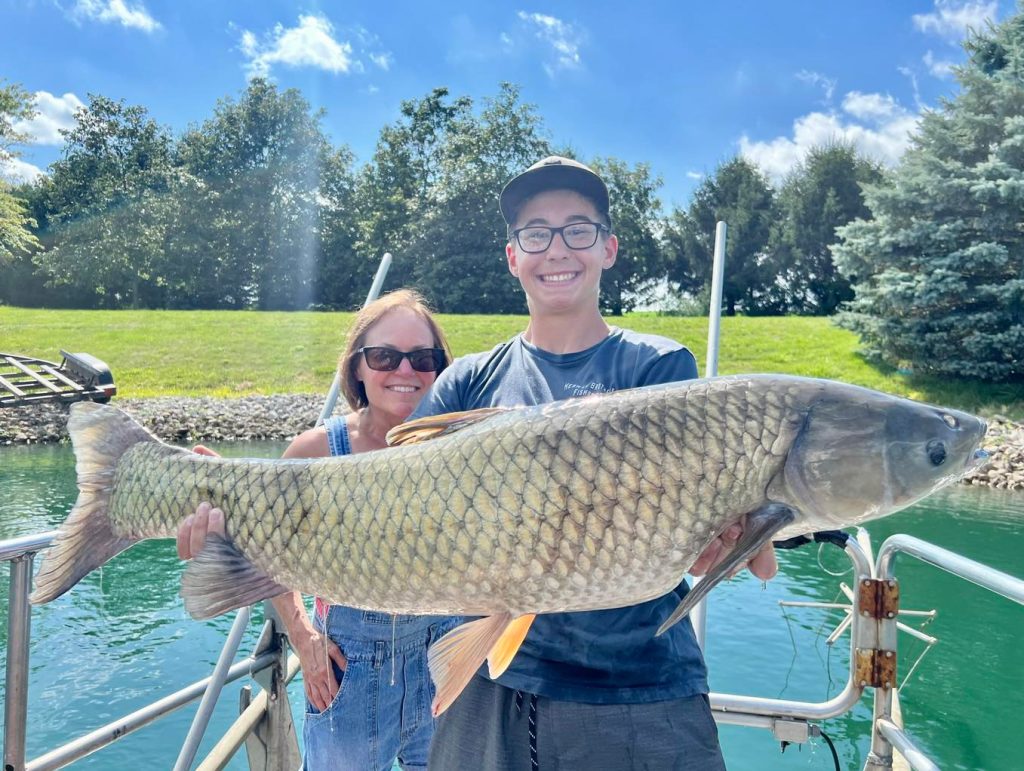
Triploid Grass Carp
Scientific name: Ctenopharyngodon idella
Stocking availability: March 1st – December 15th
Typical Stocking Rates: 5–25 per acre depending on vegetation type, density, depths, and management goals.
Why Triploid Grass Carp?
•Highly effective natural vegetation control.
•Reduce or eliminate the need for chemical treatments.
•Long-lived solution — often effective for 8-10 years.
•Cost-effective for managing problem weeds in ponds and lakes.
Management Considerations
•Proper stocking rate is critical — too many can eliminate all vegetation, which does impact fish habitat.
•Best used as part of an overall vegetation management plan.
•May take 1–2 seasons to see full results depending on plant type and density.
•Often regulated at the state level — permits are required in Illinois.
•We stock 1000’s of grass carp annually, but that doesn’t mean they are right for your situation. They can be a valuable tool, but can also cause problems too.
Fun & Interesting Facts
•Triploid Grass Carp are sterile (non-reproducing) fish specifically used for aquatic vegetation control.
•They are voracious plant eaters, capable of consuming up to 100% of their body weight per day in vegetation when young and actively feeding.
•They prefer soft, submerged vegetation like pondweed, coontail, and hydrilla, but will shift diets if preferred plants are limited. (Surface plants and algae they will eat only after all the good stuff is gone)
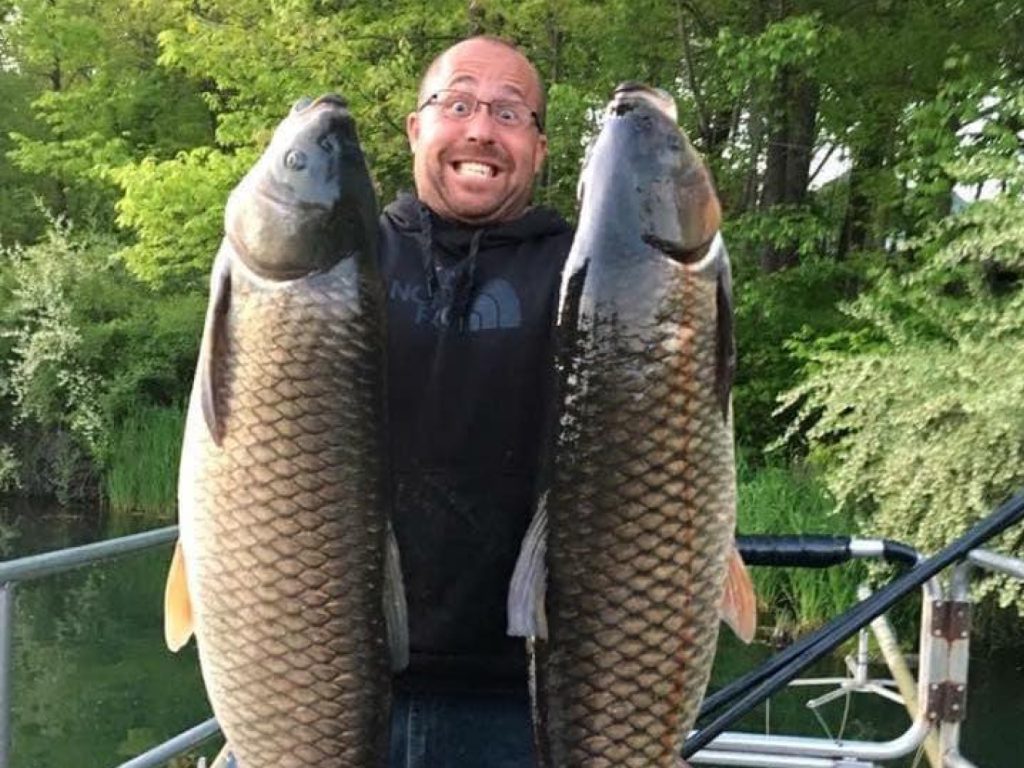
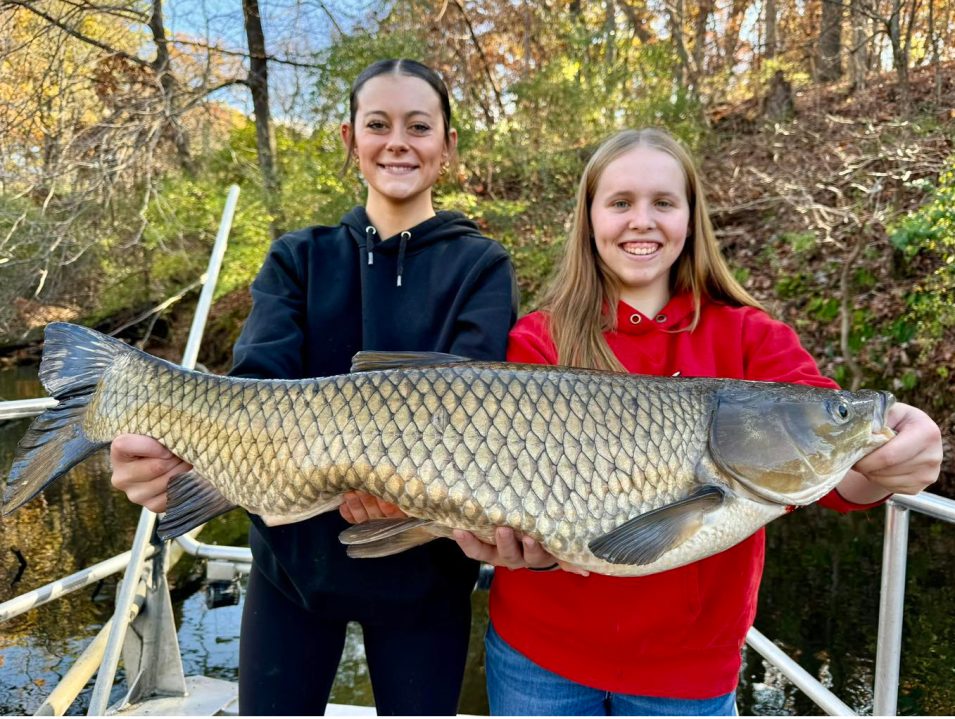
•Grass carp can grow very large, commonly reaching 40 pounds, with some exceeding 50+ pounds.
•They are originally from Asia but are widely used in the U.S. as a biological control tool for aquatic weeds.
•They are surprisingly strong and fast swimmers, but they have great eye sight and dont like their food moving, making them a challenge to catch.
•Because they are sterile, their population is completely controlled by stocking rates.
CATFISH
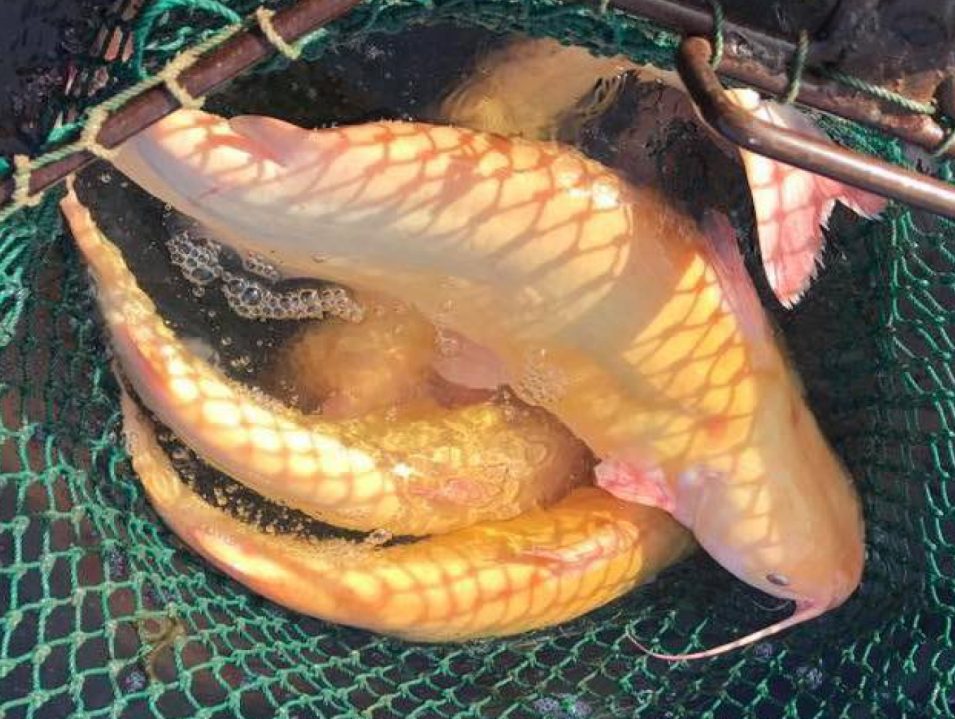
Albino Channel Catfish
Scientific name: Ictalurus punctatus (albino color variant)
Stocking availability: Only a few times per year.
Typical Stocking Rates: 1-50 per acre, depending on goals. Often stocked as a fun bonus fish.
Why Albino Channel Catfish?
•Unique and eye-catching fish that add personality to a pond.
•Great for family ponds, campgrounds, and properties where people enjoy watching fish feed.
•Same great fighting ability and table fare as traditional channel catfish.
•Often become the “favorite fish” people look for during feeding time.
Management Considerations
•Managed just like standard channel catfish as a put-and-take species.
•Feeding programs help maximize growth and visibility.
•Often stocked in smaller numbers as a novelty or highlight fish. Every pond could use a few of these.
Fun & Interesting Facts
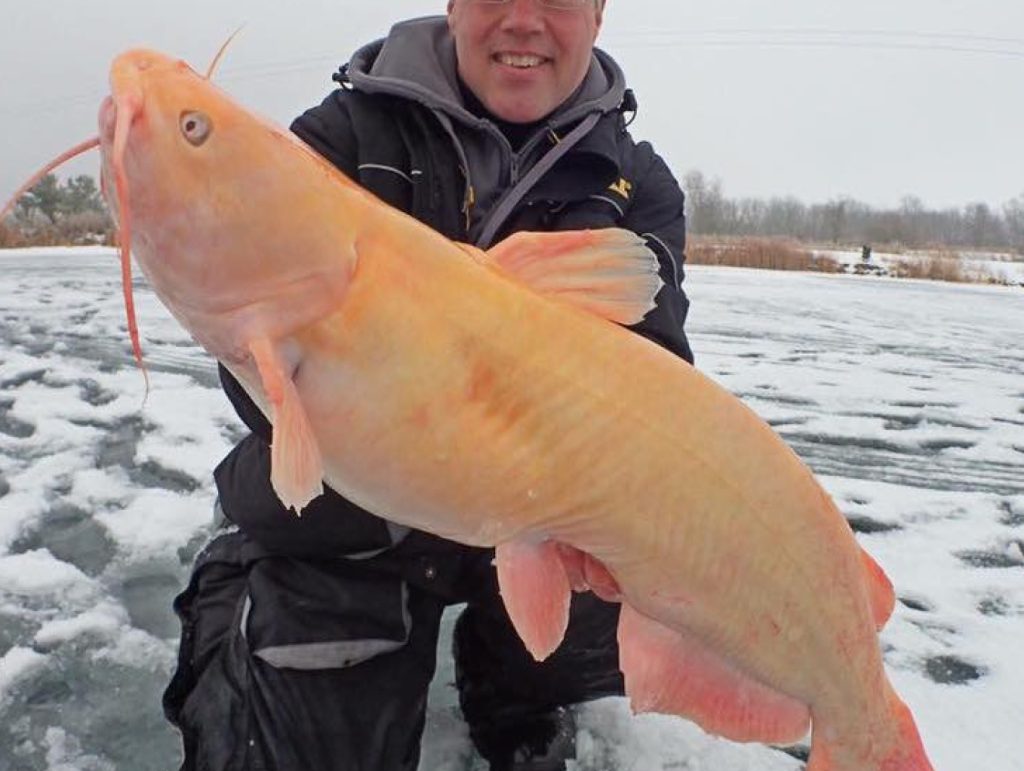
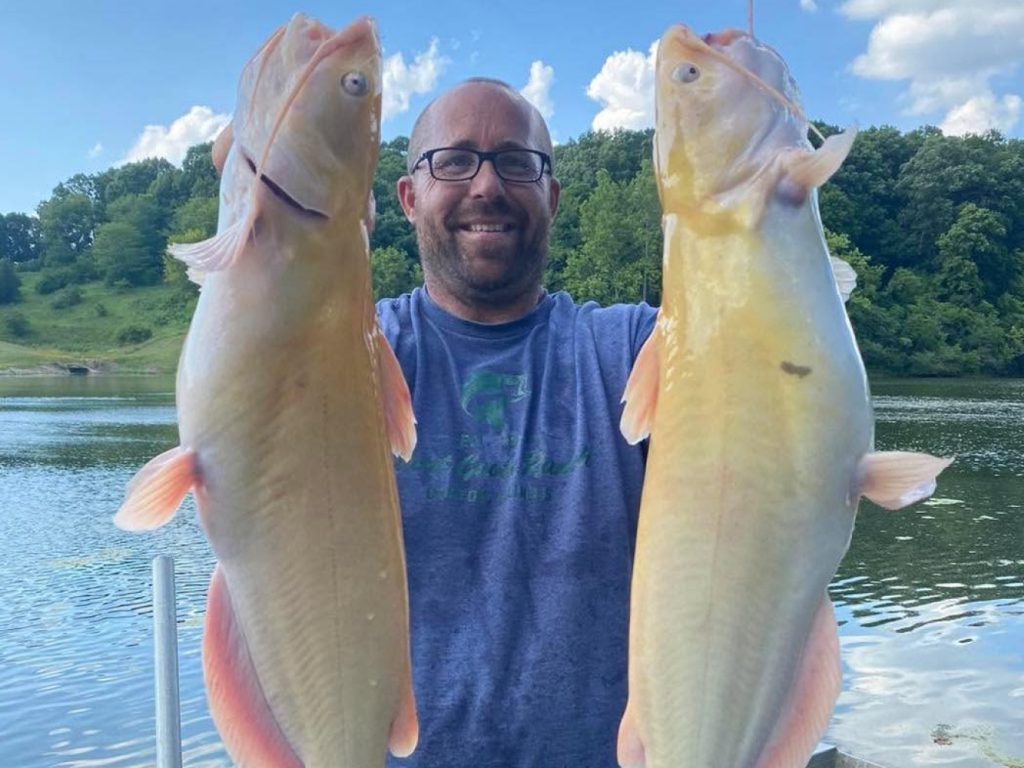
•Albino Catfish are the same species as Channel Catfish, but carry a rare genetic trait that removes dark pigment. An Albino bred with an albino will produce all albino offspring.
•Their striking white or pale yellow bodies with pink or red eyes make them easy to spot in ponds and lakes.
•Because of their bright color, they are often called “pond pets” and are fun to watch when feeding.
•They still have the same 20,000+ taste buds found on channel catfish, allowing them to easily locate food in muddy water.
•Albino catfish readily learn to feed on floating pellets and are super fun to watch feed.
•They can grow just as large as standard channel catfish, commonly reaching 5–10 pounds and occasionally much larger.
•Their bright color makes them more visible to predators in the wild, which is why the trait is rare in nature. They need to be stocked at larger sizes for best chance of survival.
Blue Catfish
Scientific name: Ictalurus furcatus
Stocking availability: Spring and Fall
Typical Stocking Rates: 5–25 per acre, depending on pond size, forage availability, and management goals.
Why Blue Catfish?
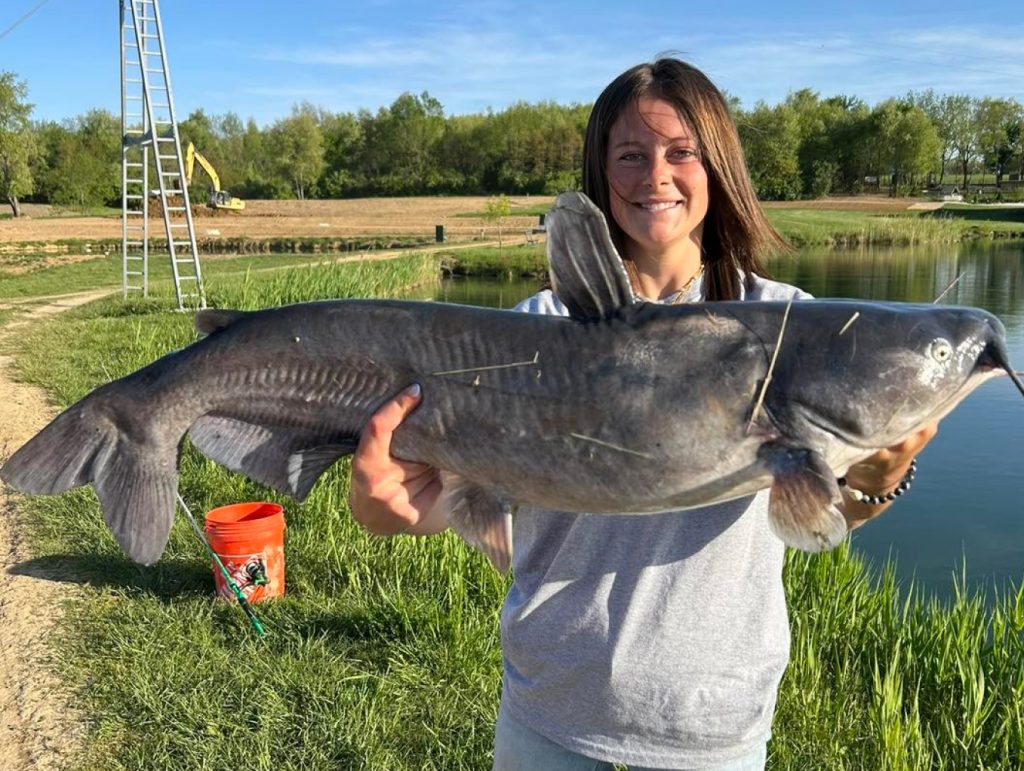
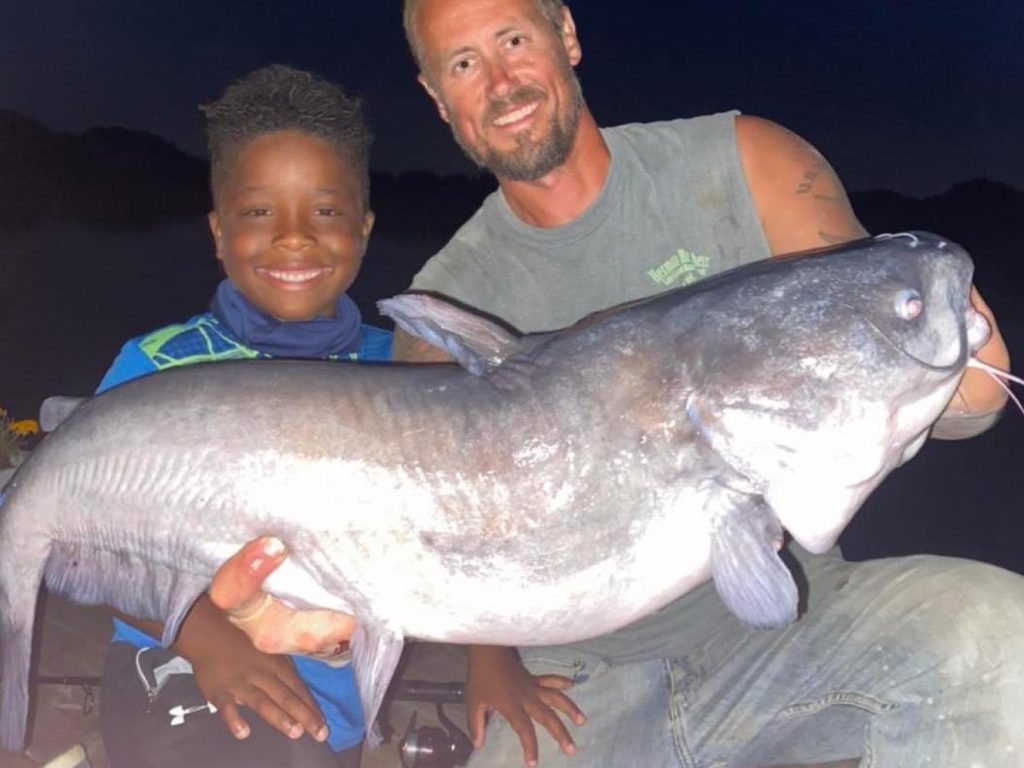
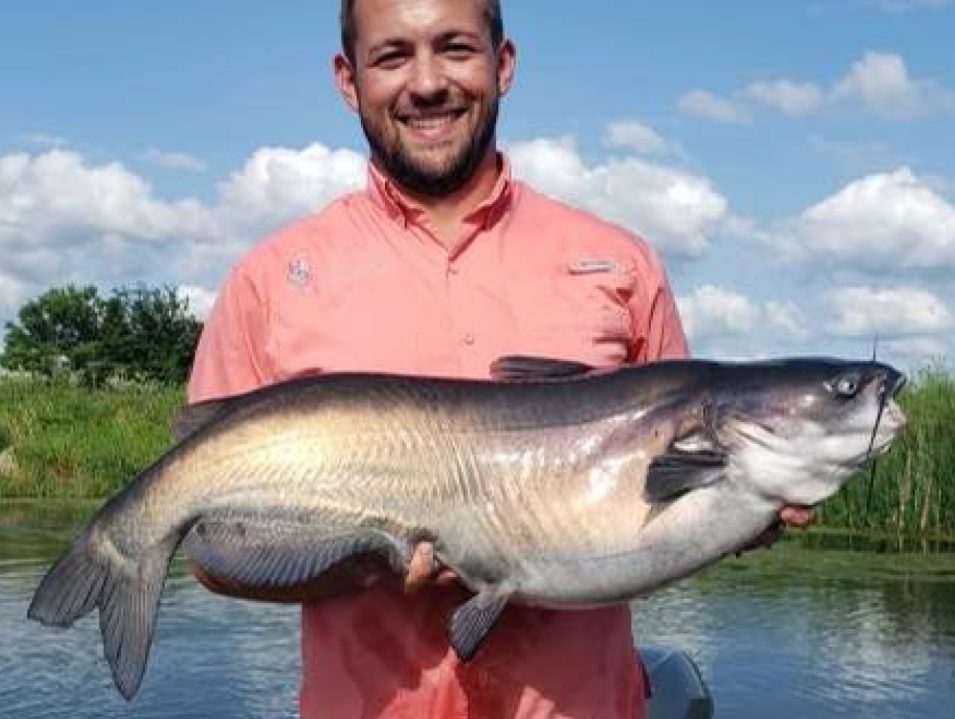
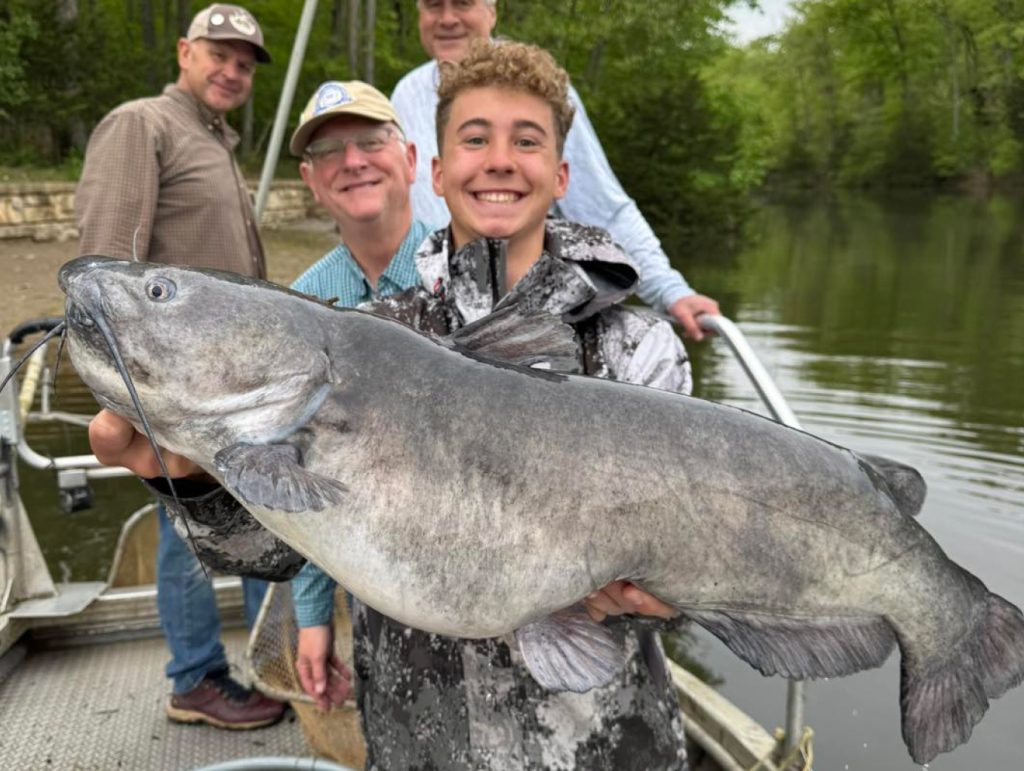
•One of the largest sportfish you can stock in a private lake. We’ve grown them 40-50 lbs in ponds.
•Excellent table fare with firm white fillets.
•Strong predator that can complement as opposed to compete with bass in many situations.
•A much better option than flathead catfish for smaller lakes and ponds.
Management Considerations
•Best suited for lakes and larger ponds with good forage availability.
•Often stocked at low densities to allow fish to grow to trophy sizes.
•Typically managed as a bonus predator alongside bass, panfish, and especially Shad and carp.
•Farm-raised fish adapt well to feeding programs and pond environments.
Fun & Interesting Facts
•Blue Catfish are the largest species of catfish in North America, capable of reaching truly massive sizes.
•The current world record Blue Catfish weighed 131 pounds, caught in Virginia in 2011.
•They are named for their bluish-gray coloration and deeply forked tail.
•Blue cats are powerful open-water predators that actively chase baitfish.
•They have an incredible sense of smell and taste, allowing them to locate food in dark or muddy water.
•Blue Catfish grow extremely fast when forage is abundant, commonly reaching 20-30 pounds in well-managed waters.
•They are known for their long, powerful runs when hooked, making them one of the toughest freshwater fish to land.
•Farm-raised Blue Catfish adapt well to pellet feeding, which can significantly increase growth rates.
Channel Catfish
Scientific name: Ictalurus punctatus
Stocking availability: Spring, Summer, and Fall
Typical Stocking Rates: 10–150 per acre, depending on goals. Often stocked as a put-and-take species with periodic restocking.
Why Channel Catfish?
•Excellent table fare.
•High catch rates = instant fishing action.
•Great supplemental species that doesn’t compete heavily with bass or bluegill when properly managed.
•Great for community lakes, campgrounds, and family ponds.
•Perfect for fishing derbies, special fishing days, creative events and contests, as they can easily and economically be stocked as adults 1 week before an event.
Management Considerations
•Typically managed as a put-and-take fishery with harvest encouraged.
•Can be pellet-trained for faster growth and easier management.
•Avoid overstocking without a harvest plan.
•Aeration and good water quality improve long-term performance.
Fun & Interesting Facts
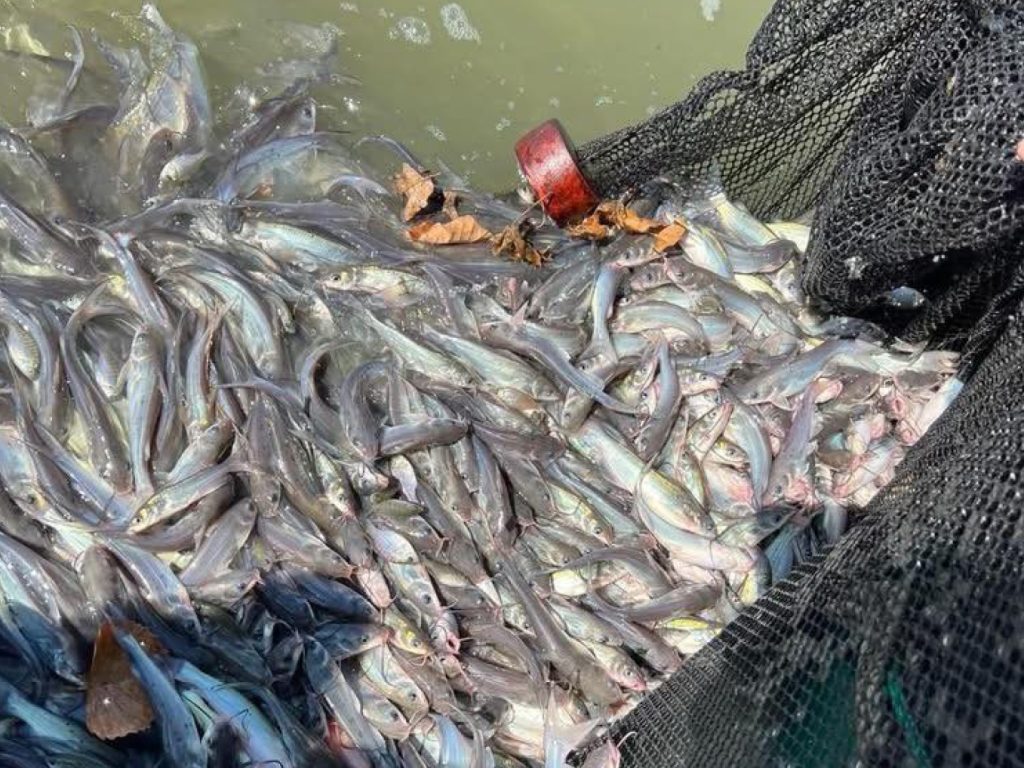
•Channel Catfish have over 20,000 taste buds — many located on their whiskers (barbels), helping them feed even in muddy water.
•They are omnivorous, eating both plants and animals.
•They’re primarily bottom-oriented but will feed throughout the water column.
•They prefer water temps of 75–85°F and thrive in warm Midwest summers.
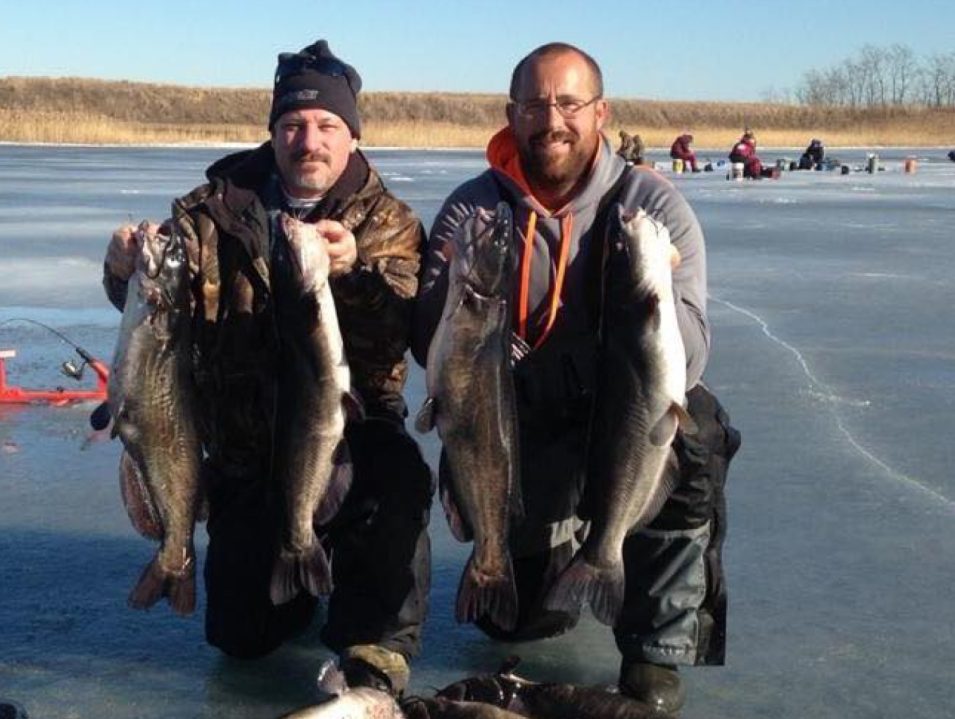
•In most ponds, they commonly reach 3–6 pounds, with trophy fish exceeding 15 pounds in the right conditions.
•They rarely reproduce successfully in clear water ponds without a specific nesting structure or muddy water. Lack of predators does increase reproduction as well.
•They are strong fighters and a favorite for kids and families because they bite readily. However, they do become very smart and hard to catch over time. Catch and keep is recommended in private ponds.
CRAPPIE
Black Crappie
Scientific name: Pomoxis nigromaculatus
Stocking availability: March 1st – December 15th
Typical Stocking Rates: 25–250 per acre, depending on pond size, predator balance, and management goals. Usually recommended for lakes 5+ acres with a strong bass presence.
Why Black Crappie?
•Extremely popular panfish with broad appeal for families and guests.
•Outstanding table fare.
•Provide exciting spring fishing action when other species are just getting active.
•Can add diversity to larger lakes managed for multiple species.
Management Considerations
•Not recommended for small ponds under 5 acres. (We do have hybrid crappies we recommend for smaller ponds)
•Black Crappie are better suited for ponds and small lakes than White Crappie.
•Require strong largemouth bass predation to prevent overpopulation.
•For best results, focus on habitat diversity and balanced predator numbers.
•Best suited for lakes managed intentionally — not as a “stock and forget” species.
Fun & Interesting Facts
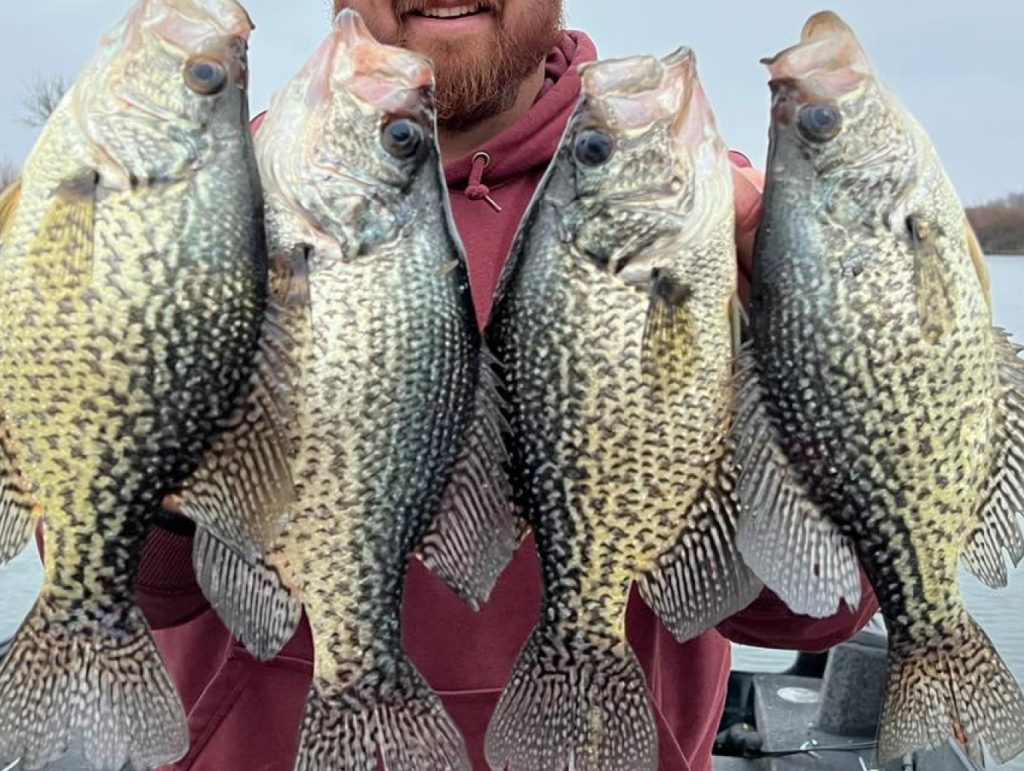
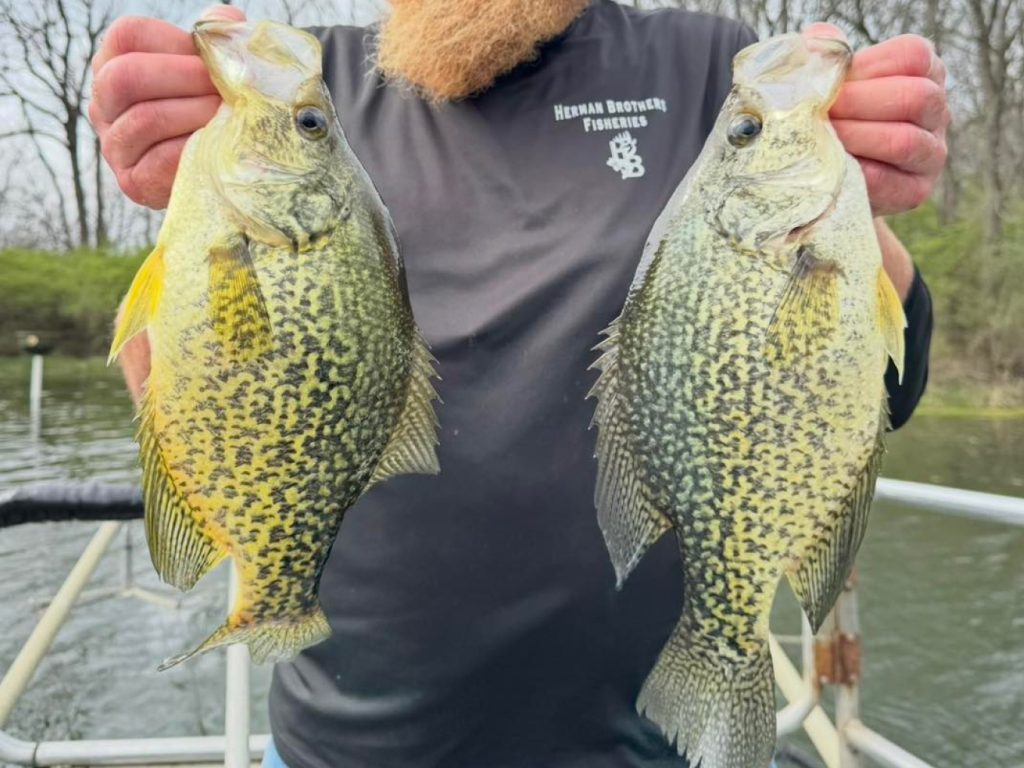
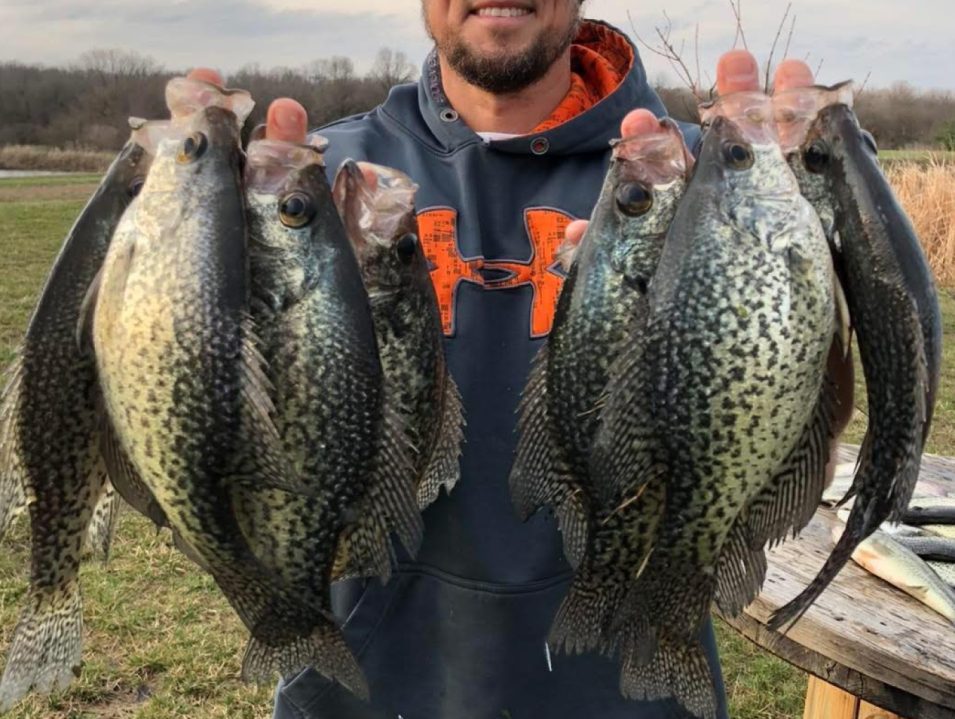
•Black Crappie are known for their mottled, speckled pattern and tall body shape with paper-thin mouths.
•Black Crappie have 7-8 spines, whereas White Crappie have just 5-6.
•They’re built for open water roaming and often suspend in schools over deeper water.
•Crappie spawn in spring when water temperatures reach 60–65°F, with males guarding shallow nests.
•They can grow 10–14 inches in well-managed ponds, with true “slabs” pushing 2+ pounds in ideal conditions.
•Their soft mouth makes landing big ones a fun challenge — light tackle fishing at its finest.
•They feed heavily on zooplankton as juveniles before shifting to insects and small fish.
Hybrid Crappie
Scientific name: Pomoxis nigromaculatus × Pomoxis annularis
Stocking availability: Fall and Winter
Typical Stocking Rates: 25–100 per acre, depending on pond size, predator balance, and management goals.
Why Hybrid Crappie?
•Easily control numbers by stocking small amounts each year.
•Excellent table fare and very popular with anglers to catch.
•Low reproduction risk compared to traditional crappie.
•Great option for adding a bonus “slab crappie” fishery to your private pond or lake.
Fun & Interesting Facts
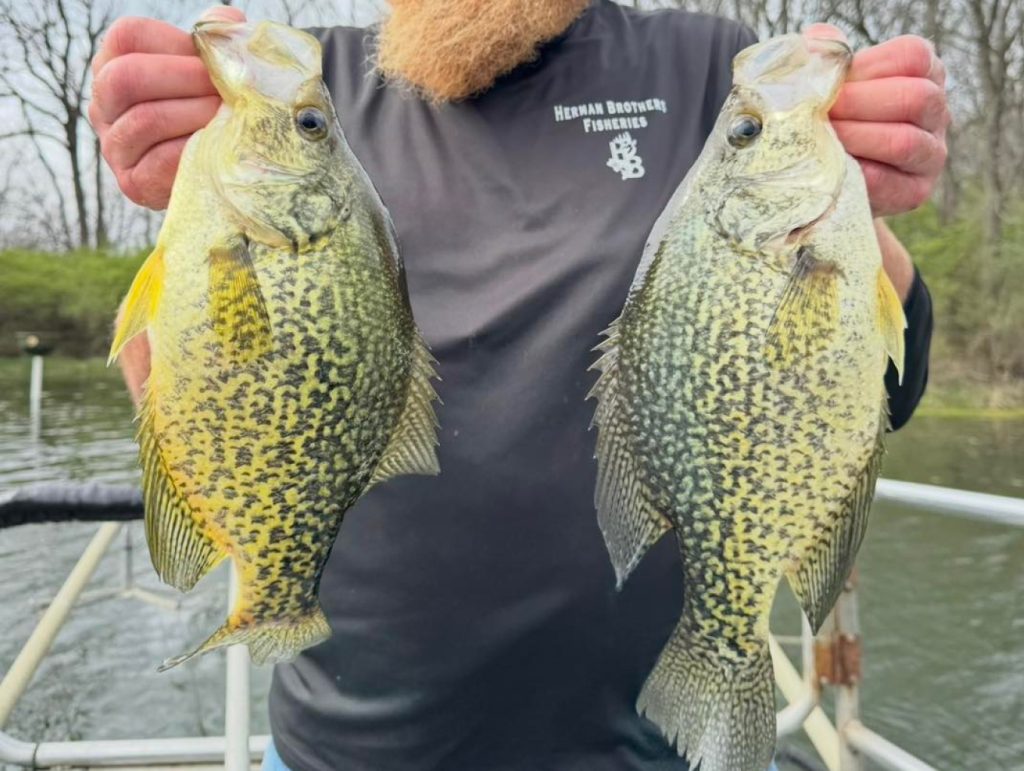
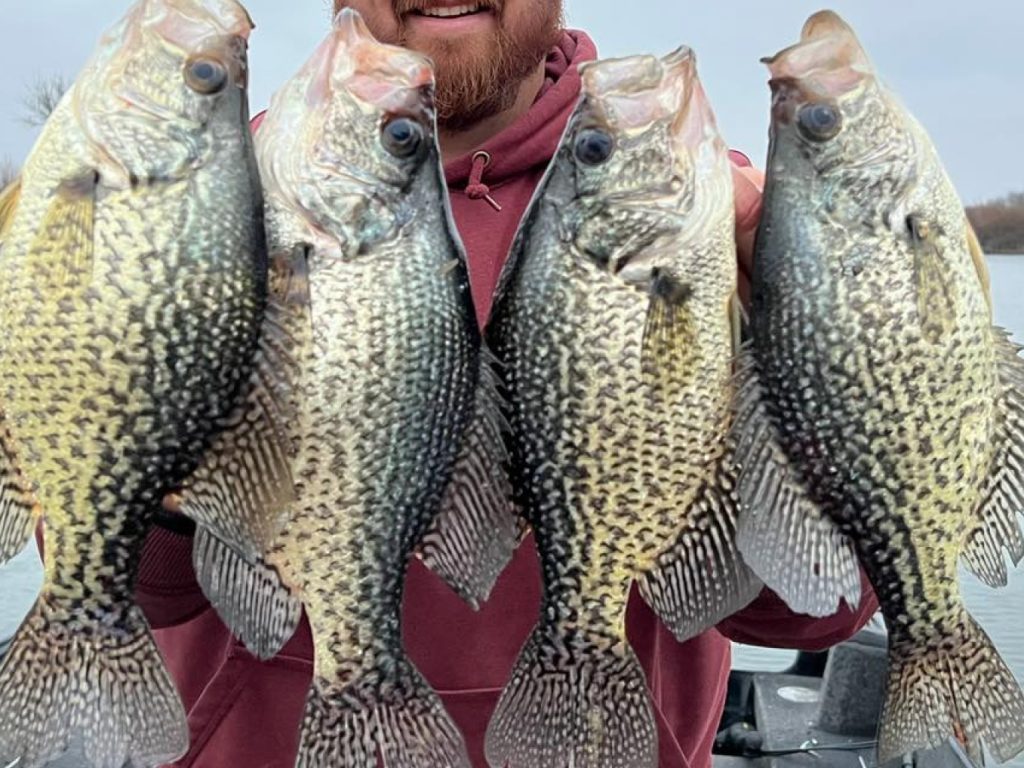
•Hybrid Crappie are a cross between Black Crappie and White Crappie, combining desirable traits from both species.
•They are developed to provide improved growth and better population control compared to traditional crappie in private lakes.
•Hybrid Crappie often grow faster and bigger than standard crappie, especially when forage is abundant.
•Many hybrid crappie populations are male-dominated, which helps reduce overpopulation risk compared to pure crappie.
•Like other crappie, they are open-water schooling fish that frequently suspend over deeper water.
•In well-managed lakes, they commonly reach 14 inches, with larger fish possible in strong forage systems with low stocking rates.
KOI
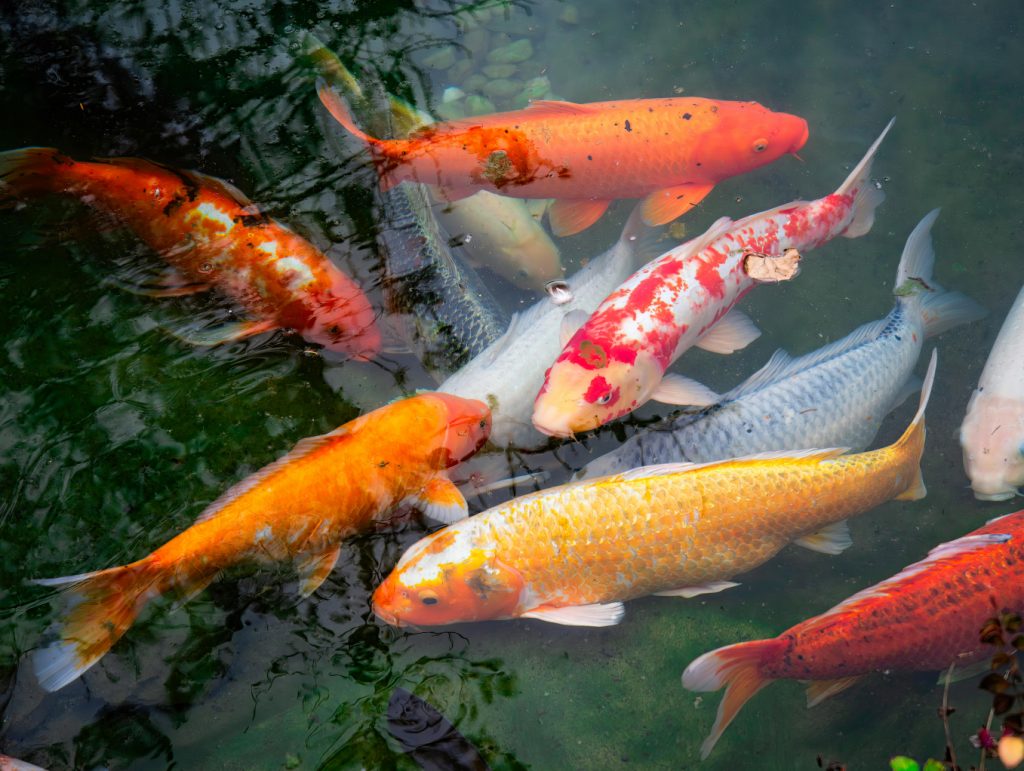
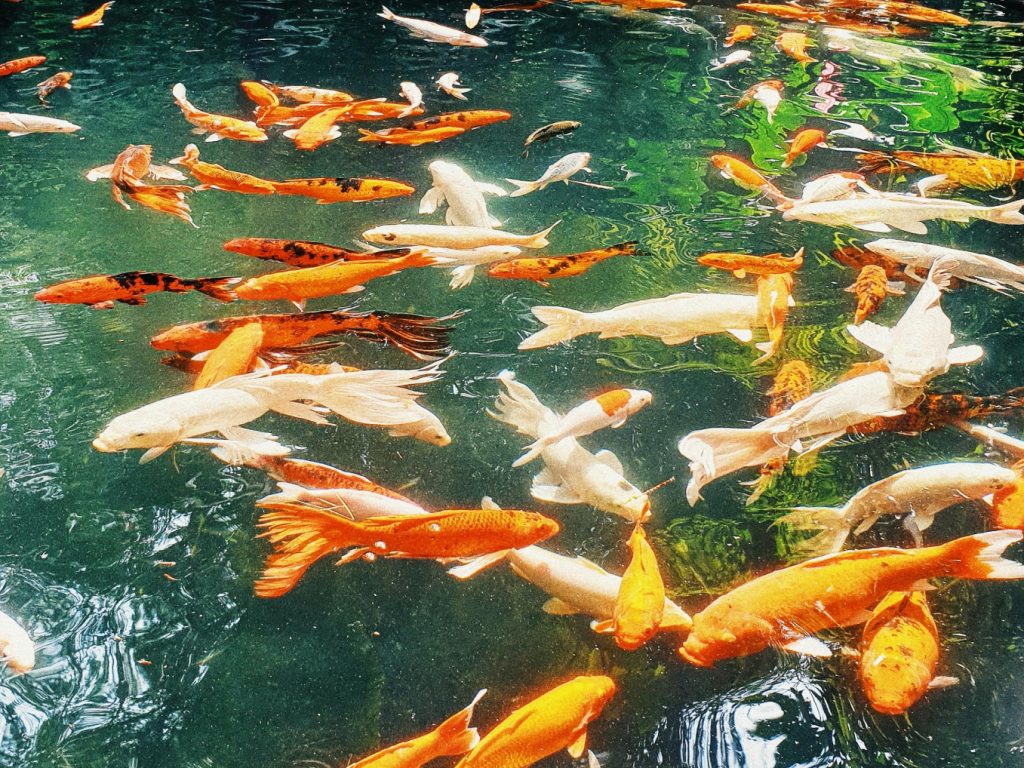
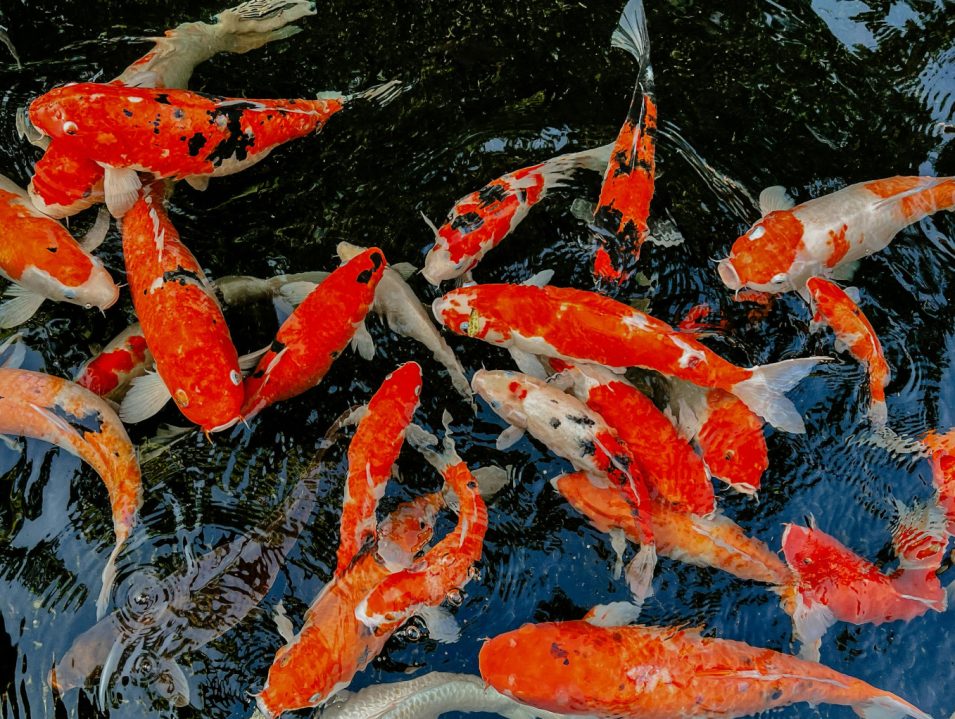
Koi Fish
Scientific name: Cyprinus rubrofuscus
Stocking availability: Spring, Summer, and Fall
Typical Stocking Rates: 5–25 per acre, depending on pond goals. Often stocked as a feature fish rather than a population-managed species.
Why Koi?
•Add incredible color and beauty to private ponds.
•Become highly visible “pond pets” that families enjoy watching.
•Can help reduce certain nuisance vegetation like duckweed and algae.
•Create a peaceful backyard water feature feel even in larger ponds.
Management Considerations
•Often stocked as a feature fish rather than a sport fish.
•Best suited for ponds where visibility and aesthetics are a priority.
•May disturb some rooted vegetation while feeding along the bottom.
•Perform best with supplemental feeding and good water quality.
Fun & Interesting Facts
•Koi are ornamental fish known for their bright orange, white, yellow, black, and patterned coloration, making them one of the most visually striking fish you can add to a pond.
•They have been selectively bred in Japan for hundreds of years for beauty, personality, and unique color patterns.
•No two koi look exactly alike — each fish develops its own distinct markings and personality.
•Koi commonly learn to recognize feeding times and even their owners, often swimming to the surface when people approach.
•Many pond owners enjoy naming their koi, especially as they become easy to identify over time.
•They are extremely hardy and can live 20–40+ years in the right conditions.
•Koi readily eat aquatic vegetation, including string algae, duckweed, pondweed, and some soft submerged plants, while also feeding on insects and pellets.
•They adapt quickly to floating fish feed, making them fun and interactive to watch during feeding.
MINNOWS
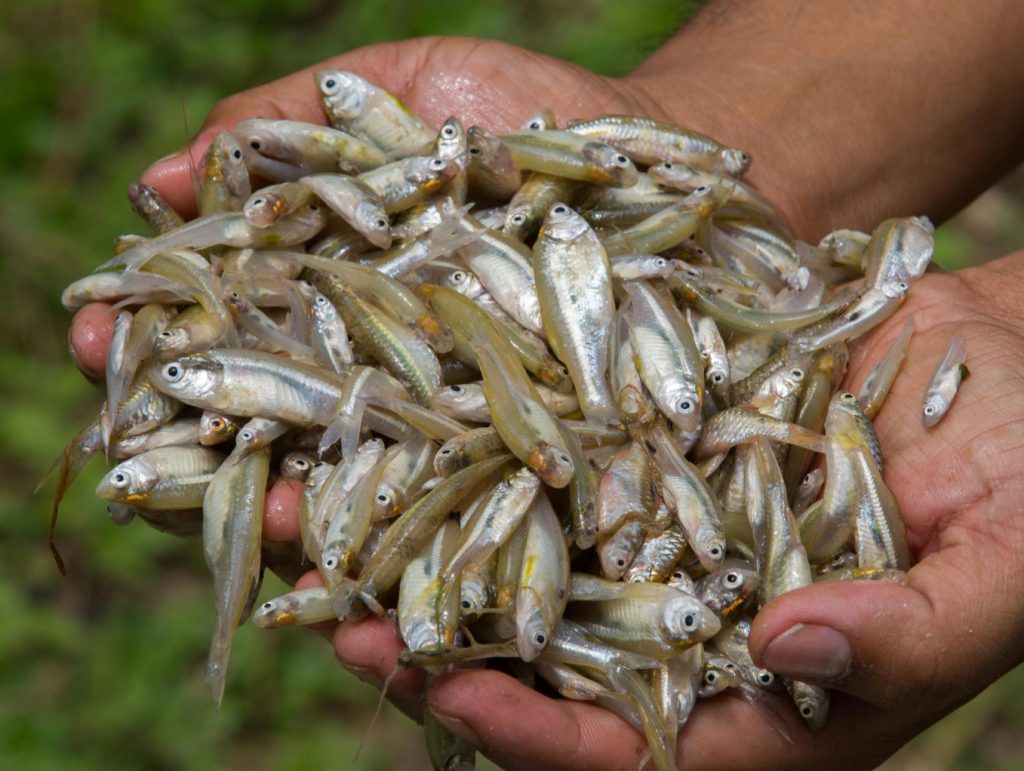
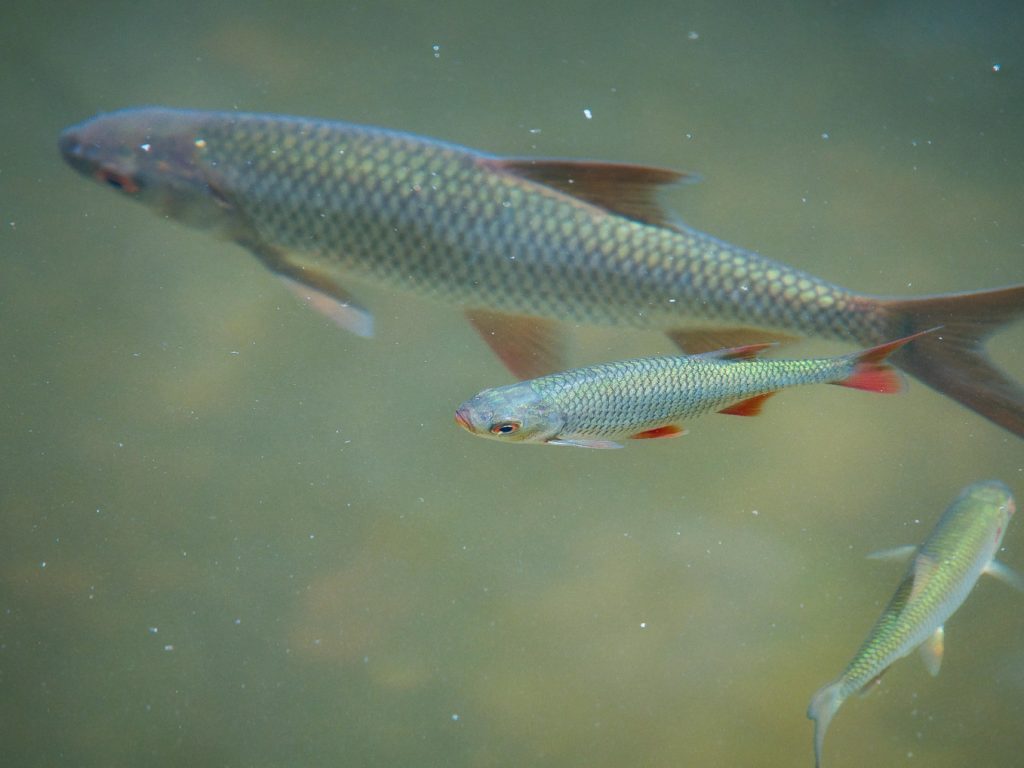
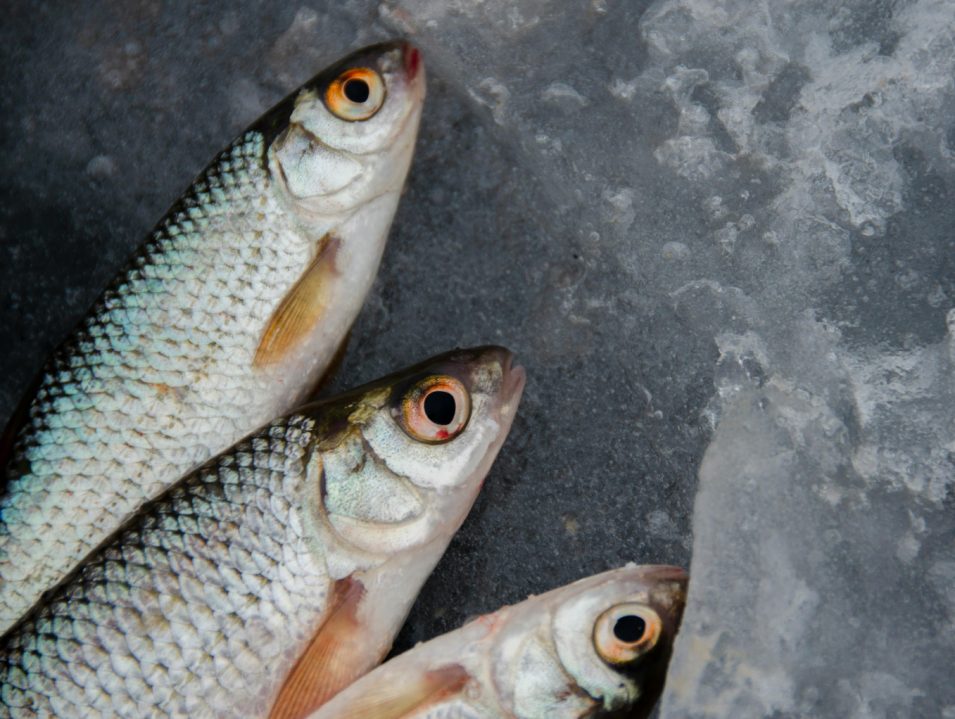
Golden Shiners
Scientific name: Notemigonus crysoleucas
Stocking availability: Year-round
Typical Stocking Rates: 5–100 pounds per acre, depending on predator populations and forage goals.
Why Golden Shiners?
•Provide excellent forage for bass, walleye, hybrid striped bass, and other predators.
•Grow larger than most forage minnows, creating bigger meals for trophy fish.
•Strong schooling behavior makes them easy targets for predator fish.
•Help support fast growth of predator populations.
Management Considerations
•Often stocked alongside other forage species in trophy bass or multi-predator fisheries.
•Benefit from aquatic vegetation or structure that provides spawning habitat.
•Work best in lakes and ponds with balanced predator populations. (Don’t feed them to skinny predators)
•Can significantly boost growth rates of larger predator fish.
Fun & Interesting Facts
•Golden Shiners are one of the largest forage minnows in North America, commonly growing 6-8 inches and sometimes larger.
•They are easily recognized by their bright golden color and deeply forked tail.
•Golden Shiners are schooling fish, often traveling in large groups in open water.
•Unlike fathead minnows, they can grow large enough to avoid predation longer, providing sustained forage for bigger bass.
•They spawn multiple times during the warm months, typically broadcasting adhesive eggs over vegetation.
•Their spawning season usually runs late spring through mid-summer when water temperatures reach around 68–80°F.
•Golden Shiners feed on zooplankton, insects, algae, and small aquatic organisms, converting pond productivity into forage for predator fish.
•They are one of the most popular baitfish used by anglers across North America.
MUSKIE
Tiger Muskie & Pure Muskie
Scientific name: Esox masquinongy × Esox lucius (Tiger Muskie), Esox masquinongy (Muskellunge)
Stocking availability: Fall and Winter
Typical Stocking Rates: 1–5 per acre, depending on pond or lake size, forage base, and management goals.
Why Tiger and Pure Muskies?
•Ultimate trophy predator for serious anglers.
•Create a “northwoods-style” fishing experience in private lakes.
•Help control abundant stunted fish and rough fish populations when stocked properly.
•Low stocking numbers make them a high-impact, low-density feature fish.
Management Considerations
•Best suited for larger lakes with strong forage populations.
•Tiger Muskies are often preferred in private waters because of faster initial growth and higher catch rates.
•Stock conservatively to avoid excessive predation on sportfish populations.
• Works best as a top-end bonus predator alongside largemouth bass, especially when gizzard Shad and common carp are present.
Fun & Interesting Facts
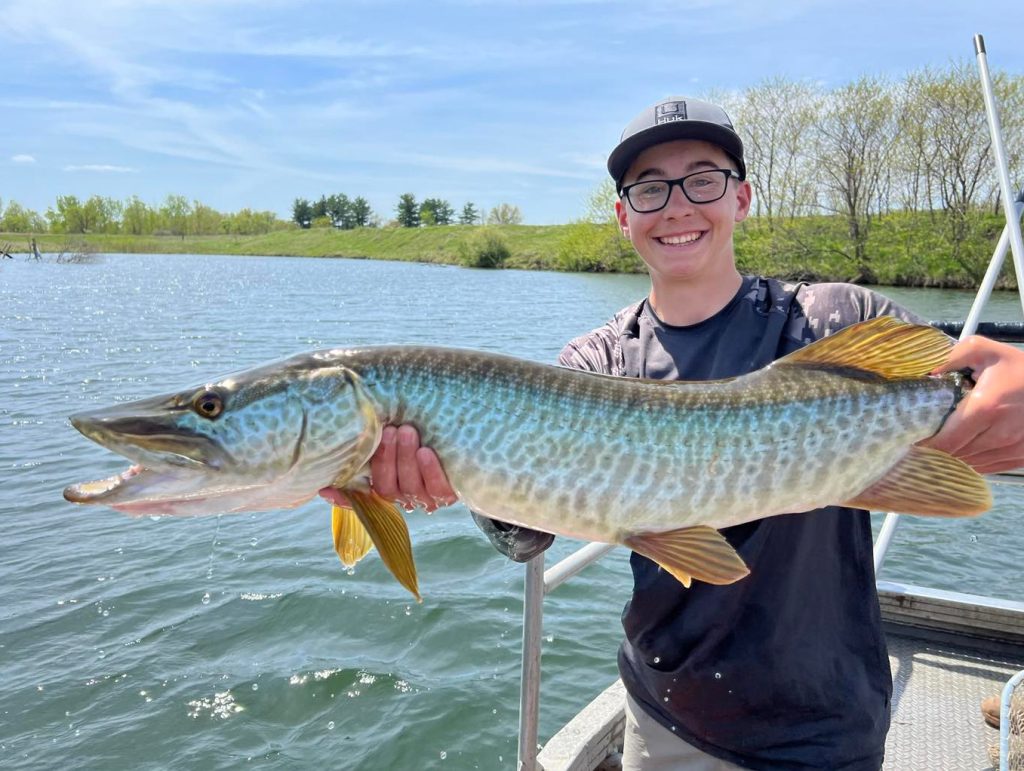
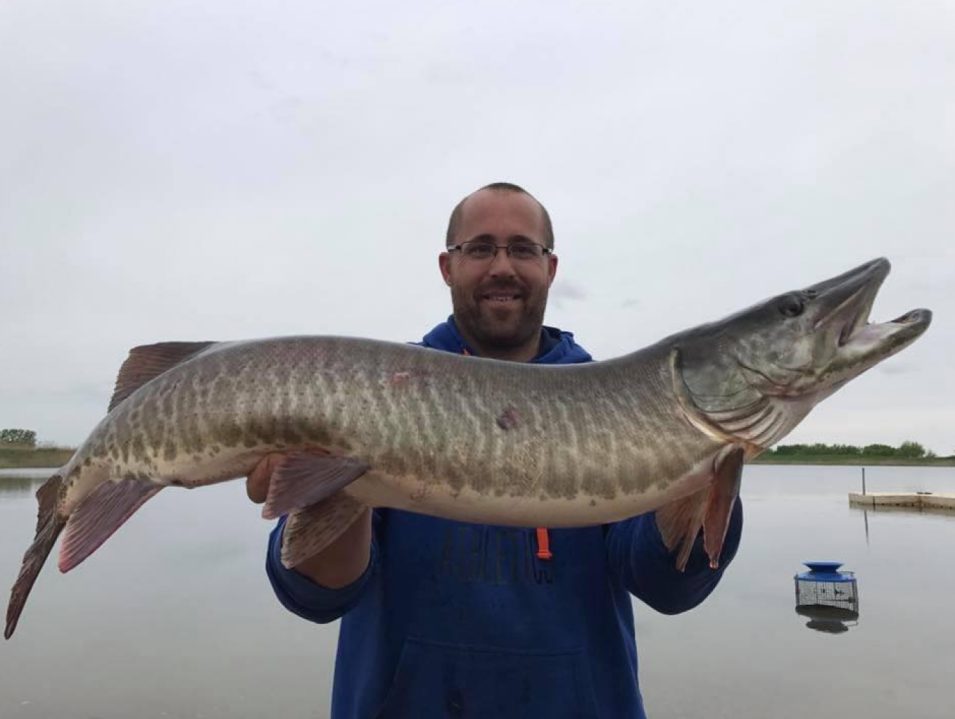
•Tiger Muskies are a hybrid between Muskellunge and Northern Pike, combining the size potential of muskie with the aggression of pike.
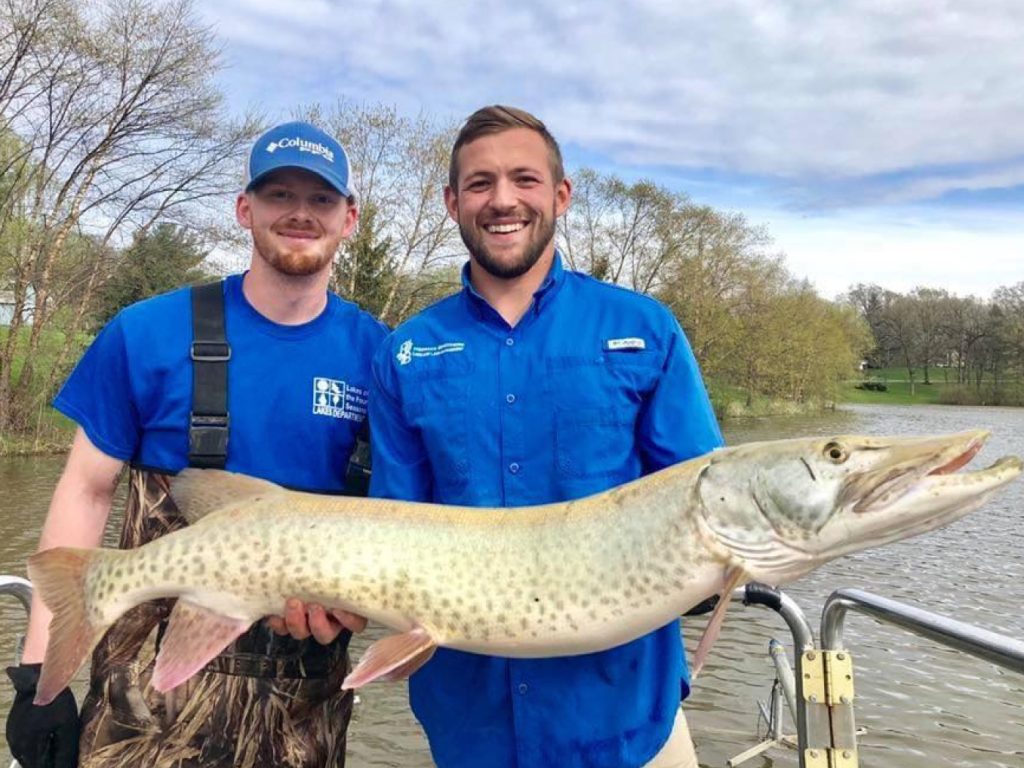
•Pure Muskellunge are often called “the fish of 10,000 casts” because of their legendary challenge to catch.
•Tiger Muskies typically grow faster than pure muskies, making them excellent trophy predators for private lakes.
•Both species are apex predators, feeding primarily on long, slender fish like Shad, carp, perch, and small bass.
•Tiger Muskies display striking vertical bar patterns, while pure muskies usually show spots or faint markings depending on strain.
•Because Tiger Muskies are hybrids, they are functionally sterile. However, very little natural reproduction of Muskies are found in Illinois.
•Muskies can live a long time and may reach 40–50+ inches in lakes with strong forage bases.
•They strike with explosive speed and are widely considered one of the most exciting freshwater fish in North America to pursue.
PERCH
Yellow Perch
Scientific name: Perca flavescens
Stocking availability: Early Spring and Fall
Typical Stocking Rates: 50–750 per acre, depending on predator balance and management goals.
Why Yellow Perch?
•Outstanding table fare, beautiful and extremely popular with anglers.
•Provide excellent winter and early spring fishing opportunities.
•Great species for diversified fisheries.
•Can serve as both a sportfish and a forage species in some predator systems.
Management Considerations
•Often stocked with predators such as smallmouth bass, hybrid striped bass or walleye to maintain balance. Largemouth Bass wipe out most perch under 10” long.
•Prefer cooler water and benefit from good water quality and oxygen levels.
•Habitat like vegetation, brush, or artificial structure helps improve spawning success and escape predation.
•Population balance is important to maintain good growth rates.
•They feed train well and will eat supplemental fish food best at sunrise and sunset (low light)
Fun & Interesting Facts
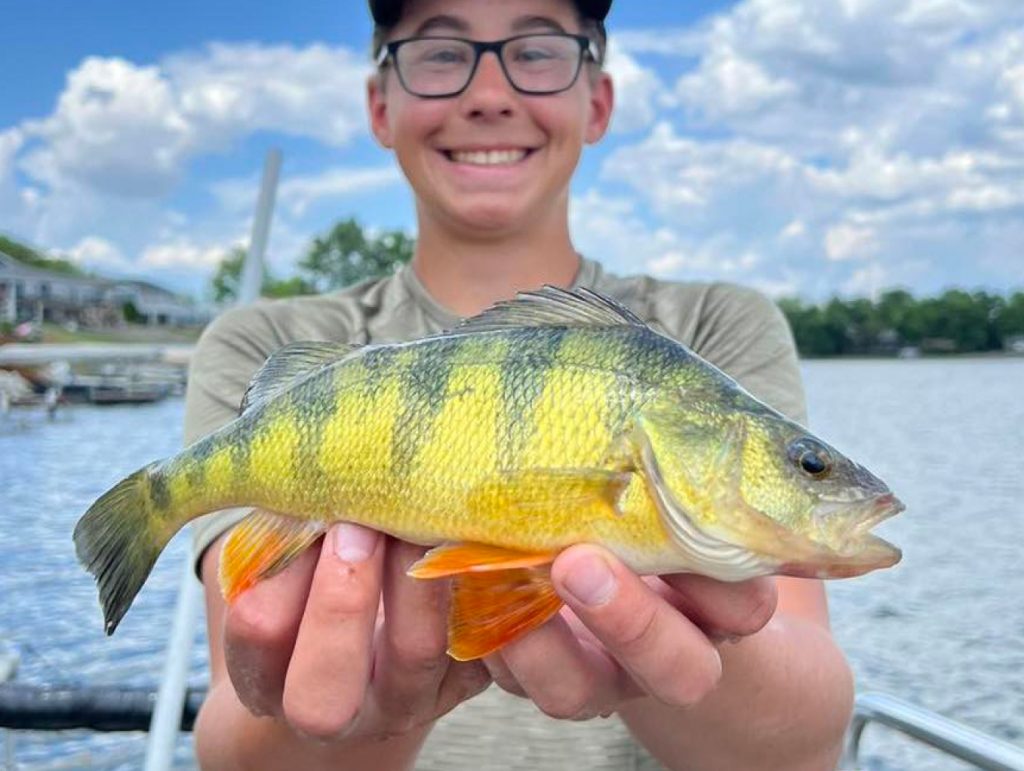
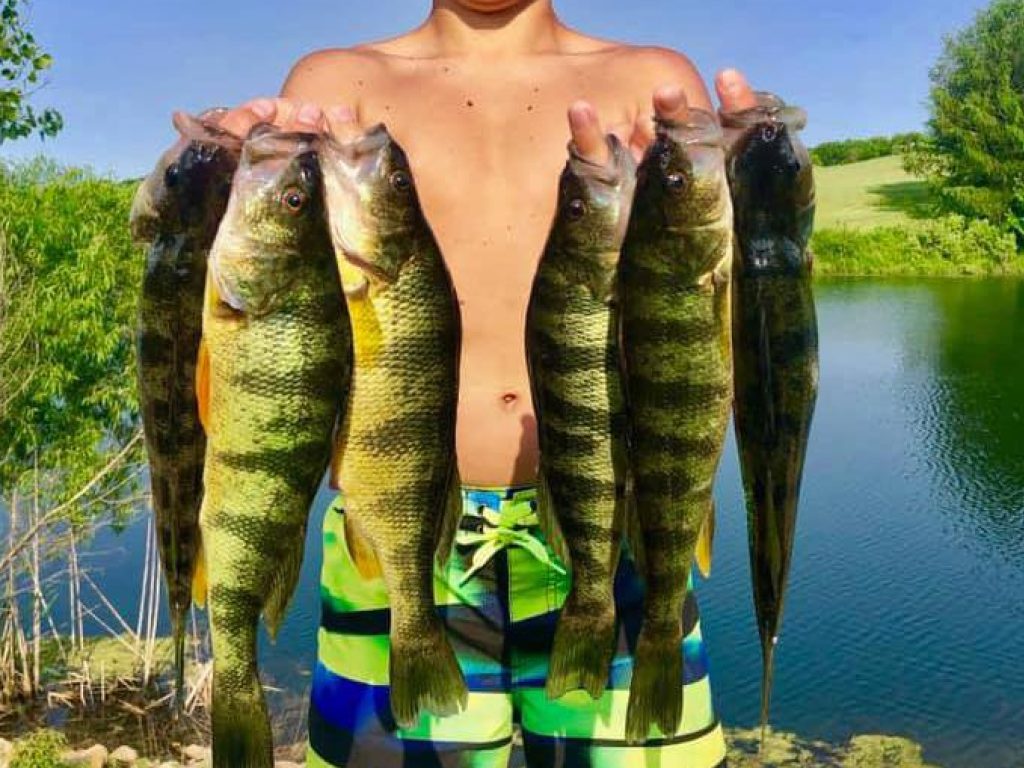
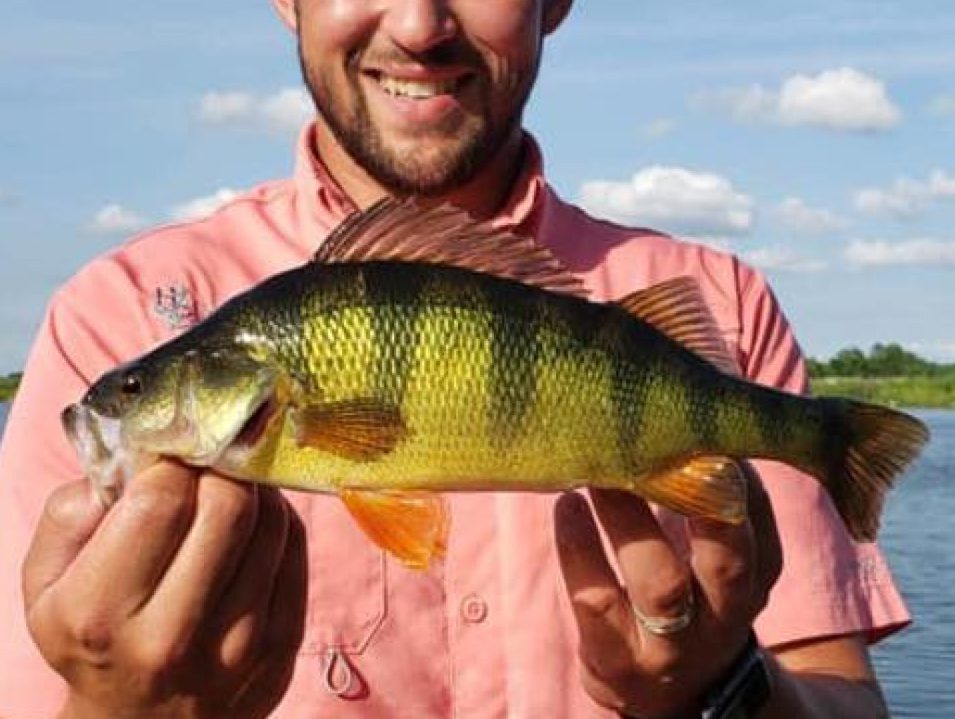
•Yellow Perch are easily recognized by their golden-yellow body and dark vertical bars, giving them one of the most beautiful patterns of any freshwater fish.
•They are easy to clean and one of the best-tasting freshwater fish in North America, famous for traditional Midwest fish fries.
•Unlike most sunfish, perch do not lay their eggs on the ground. They lay long gelatinous ribbons that can contain 10,000–40,000 eggs.
•These egg ribbons are often draped over vegetation, brush, or submerged structure in early spring.
•Perch are schooling fish that often travel together in groups, especially in open water. Typically caught near the bottom.
•They feed the most in low light conditions and rely heavily on insects, zooplankton, small minnows, and young fish.
•In well-managed ponds and lakes, they commonly reach 10-12 inches, with trophy jumbo perch exceeding 14 inches.
•They thrive in cooler water conditions, making them a great option for northern and Midwest ponds.
PIKE
Northern Pike
Scientific name: Esox lucius
Stocking availability: Late Fall
Typical Stocking Rates: 1–10 per acre, depending on pond size, forage base, and management goals.
Why Northern Pike?
•Top-end predator that creates a true “trophy” fishing experience.
•Help control overabundant forage or small fish populations.
•Provide aggressive, hard-hitting strikes anglers love.
•Add diversity and excitement to larger lakes.
Management Considerations
•Best suited for larger ponds and lakes with strong forage populations. Especially carp, shad, and other rough fish.
•Can significantly impact other fish populations if not carefully managed.
•Prefer cooler water and benefit from good oxygen levels.
•Stock at low densities to avoid over-predation.
Fun & Interesting Facts
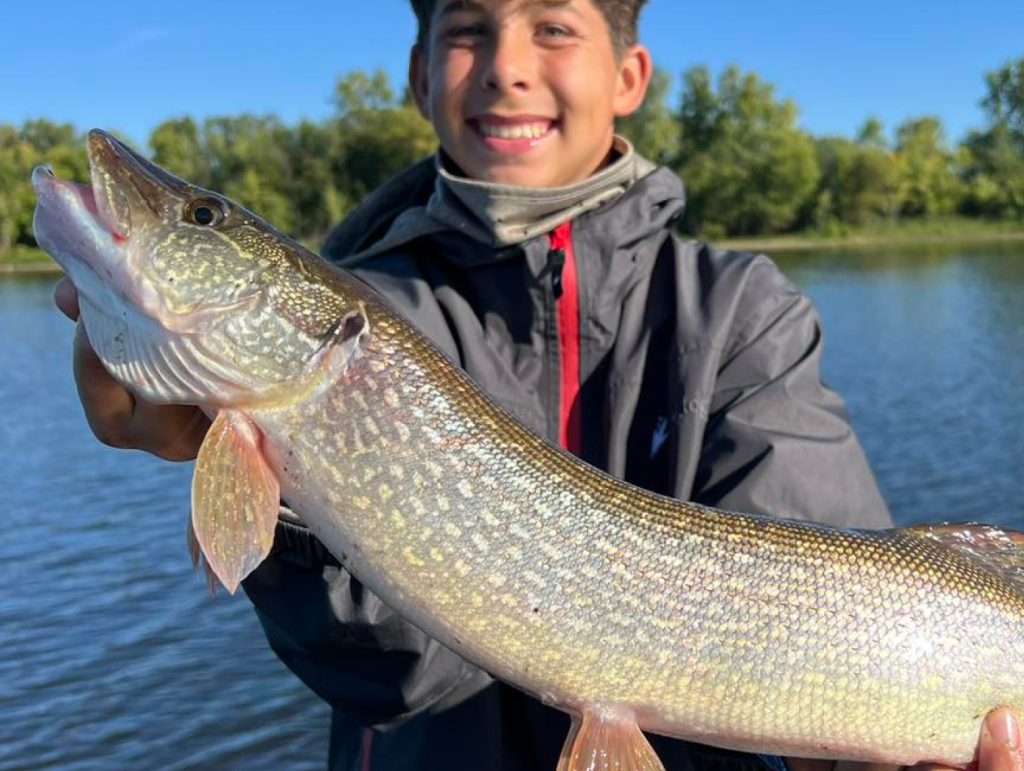
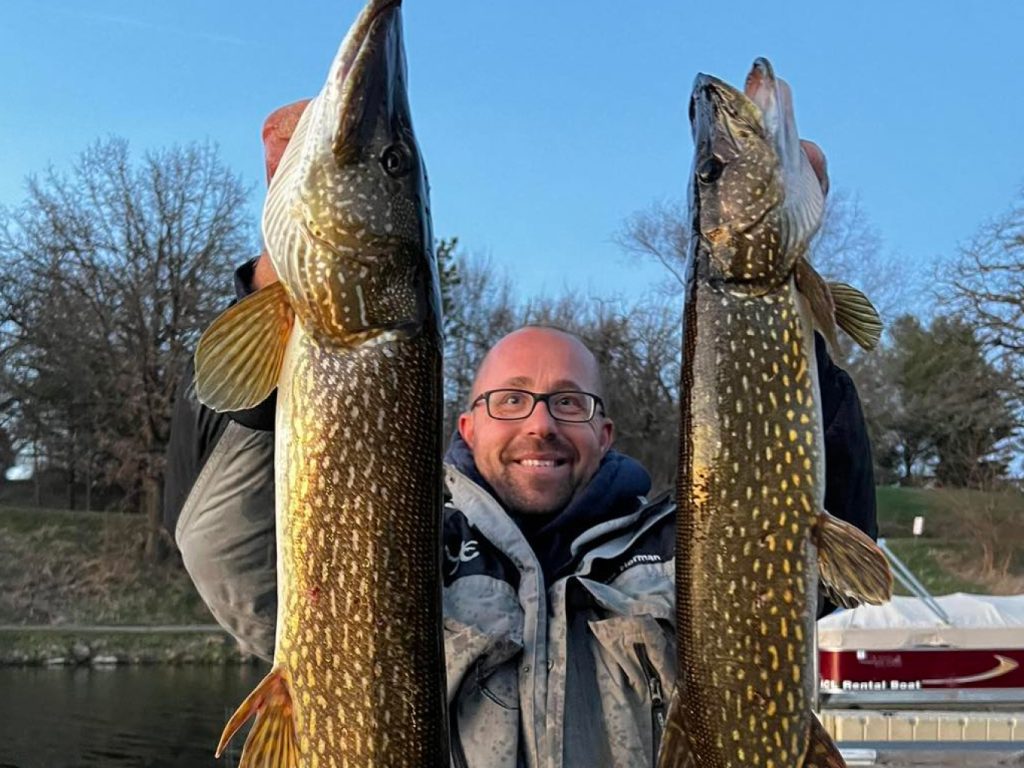
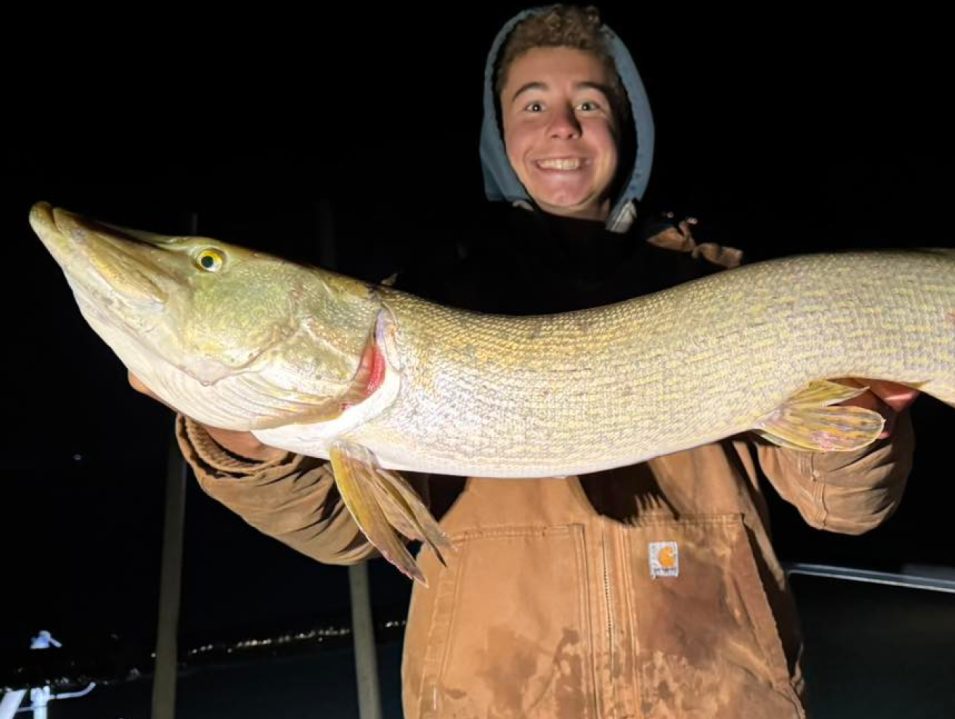
•Northern Pike are apex predators known for their long, torpedo-shaped bodies and explosive strikes.
•They are masters of ambush, often hiding in vegetation or along structure before attacking prey with lightning speed.
•Pike have hundreds of razor-sharp teeth, all angled backward to prevent prey from escaping.
•They primarily feed on fish, but will also eat frogs, small birds, and rodents.
•Northern Pike prefer cooler water and thrive in lakes with vegetation and good water quality.
•They can grow quickly, commonly reaching 24–36 inches, with trophy fish exceeding 40+ inches.
•Pike spawn very early in the year, often right after ice-out, scattering eggs over shallow vegetation.
•They are known for their aggressive nature, making them one of the most exciting fish to catch.
SUNFISH
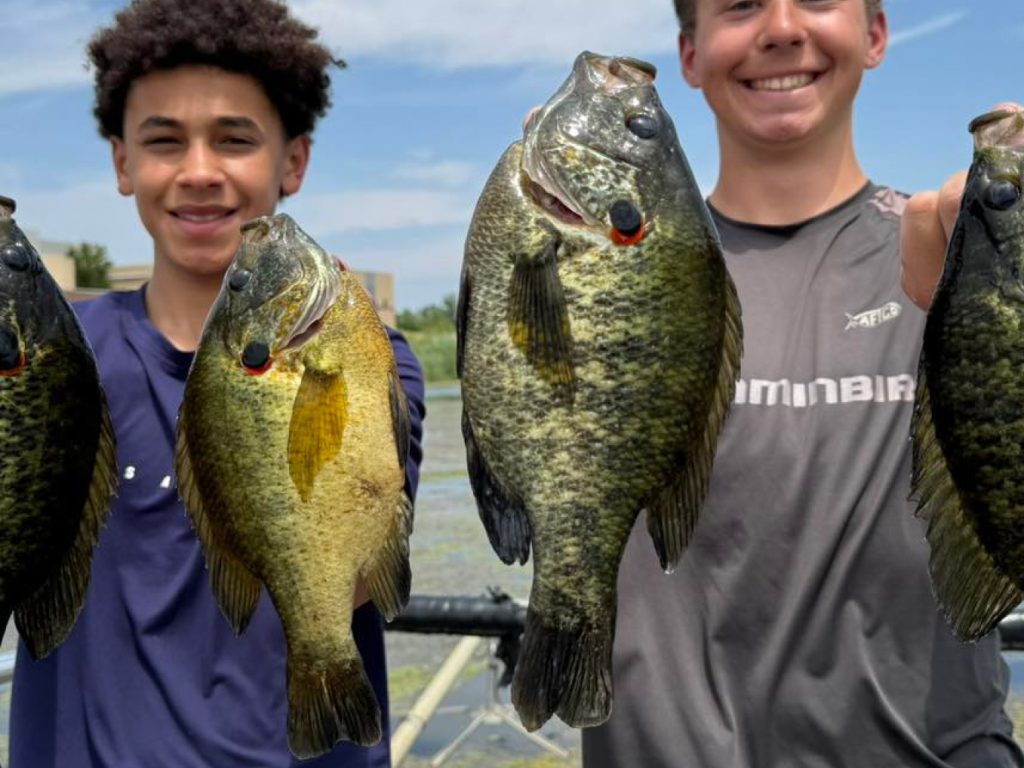
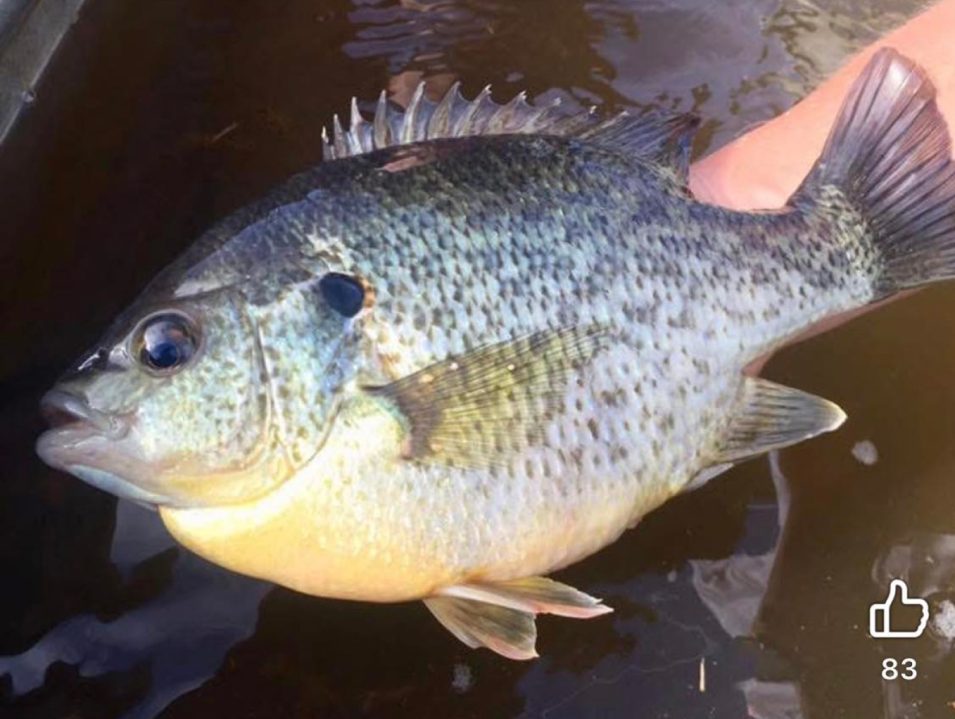
Redear Sunfish (Shellcracker)
Scientific name: Lepomis microlophus
Stocking availability: Spring and Fall
Typical Stocking Rates: 100–300 per acre when stocked with bluegill and bass in balanced pond systems. 500-1000 per acre when stocked without regular bluegill and with smallmouth bass.
Why Redear Sunfish?
•Help control snails and certain parasites.
•Grow larger than typical bluegill.
•Excellent table fare with firm white fillets.
•Add diversity to panfish populations in ponds and lakes.
•Their red ear is beautiful.
Management Considerations
•Often stocked alongside bluegill as a secondary panfish species.
•Do best in ponds with good water quality and natural food sources like snails and insects.
•Since they spawn less frequently than bluegill, they rarely become overpopulated.
•Provide a unique fishing opportunity because they are often caught slightly deeper than bluegill.
Fun & Interesting Facts
•Redear Sunfish get their nickname “shellcracker” because they specialize in eating snails, mussels, and other hard-shelled aquatic organisms.
•They have large molar-like teeth in their throat that crush snail shells — a rare trait among freshwater fish.
•Because they eat so many snails, they can help reduce fish parasites that use snails as part of their life cycle.
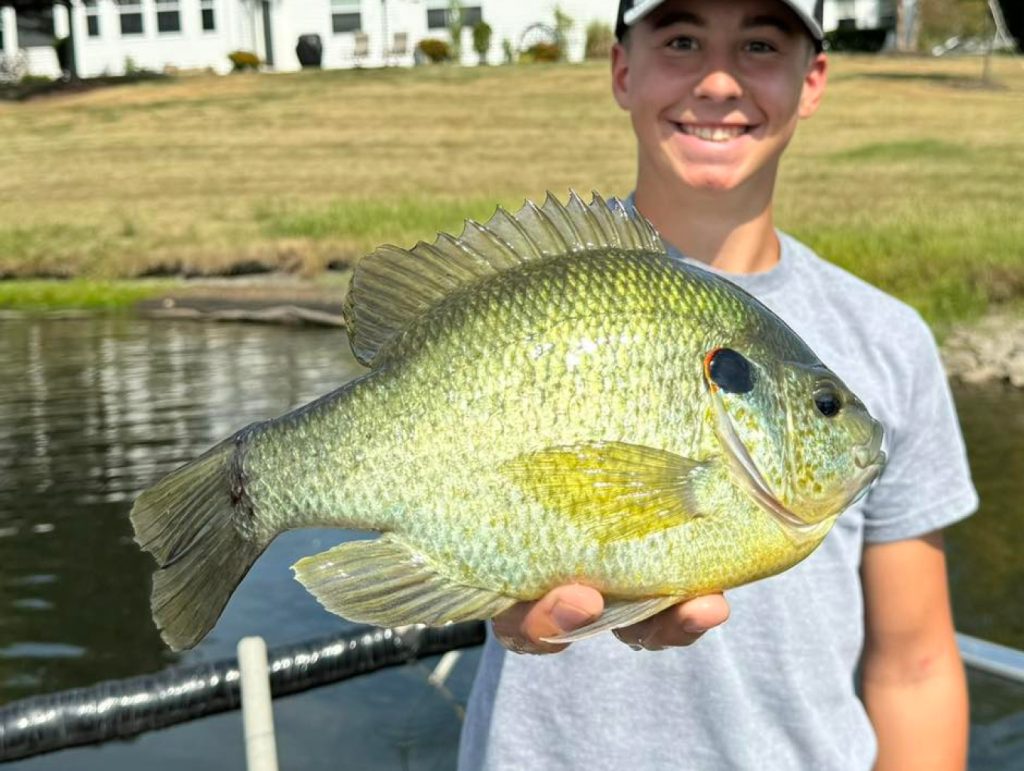
•They are closely related to bluegill but grow larger on average and are often heavier-bodied.
•Redear typically spawn once per year when water temperatures reach about 70°F, usually slightly deeper than bluegill nests.
•Males build nests in small colonies but are much less aggressive spawners than bluegill, which helps prevent overpopulation.
•They are known for their subtle bite and deep-water habits, making them a prized catch for experienced anglers. Key tip: fish down at the bottom.
•In well-managed lakes, they commonly reach 9–11 inches, with trophy fish exceeding 2 pounds.
TROUT
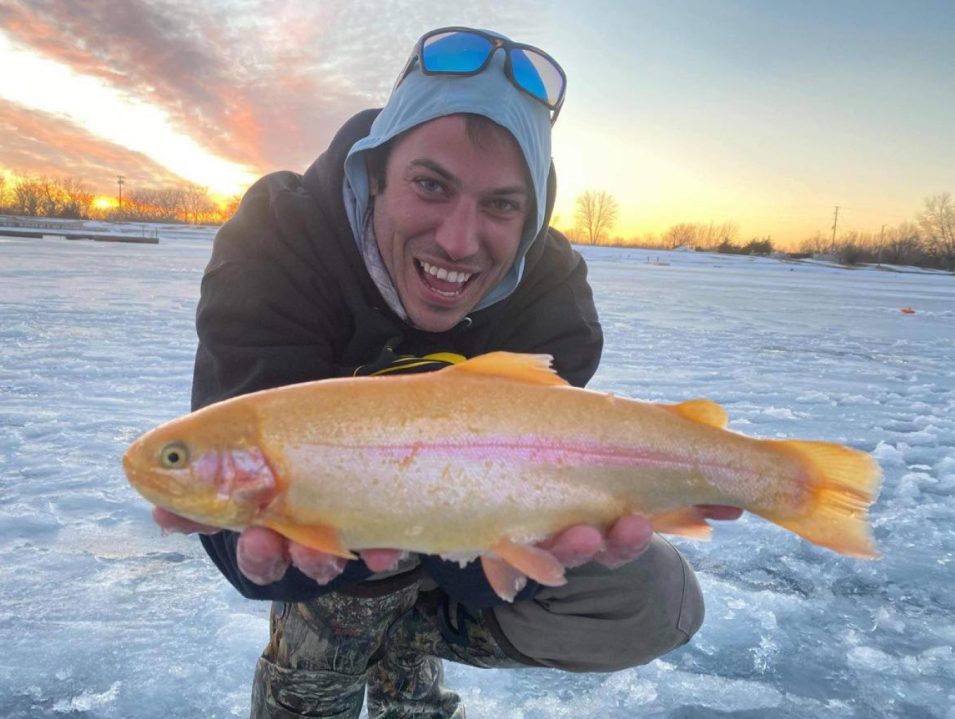
Rainbow Trout
Scientific name: Oncorhynchus mykiss
Stocking availability: Year-Round
Typical Stocking Rates: 25-100 lbs per acre. We stock forage trout for feeding your bass, as well as catchable-size trout 1-2 lbs and 3-6 lbs each, depending on pond size, upcoming events, or derbies and management goals.
Why Rainbow Trout?
•They are the best forage for growing trophy bass.
•Provide exciting cold-weather fishing opportunities.
•One of the best-tasting freshwater fish.
•Perfect for extending the fishing season in ponds and lakes.
•Great option for family fishing during the cooler months.
Management Considerations
•The number one forage for growing trophy largemouth bass.
•Typically stocked in fall or winter when water temperatures drop below about 65°F.
•Usually harvested before summer as water warms.
•Aeration and good water quality help maximize survival and growth.
•Often stocked in ponds that already contain bass and panfish since they generally don’t compete heavily during the cooler months.
Fun & Interesting Facts
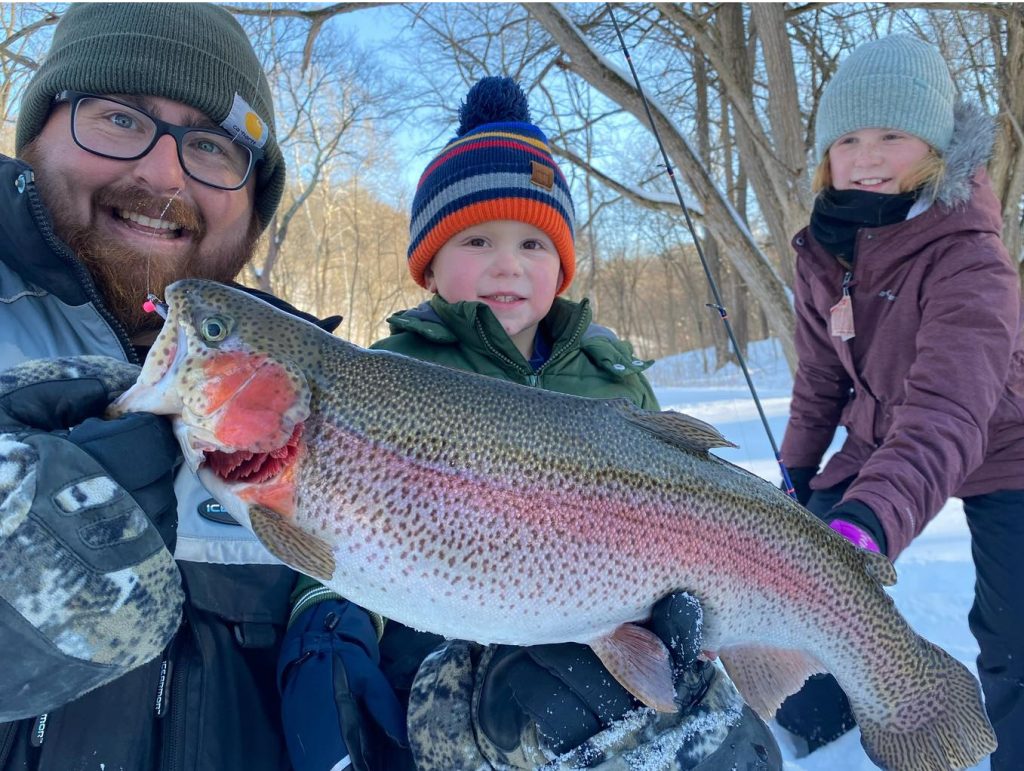
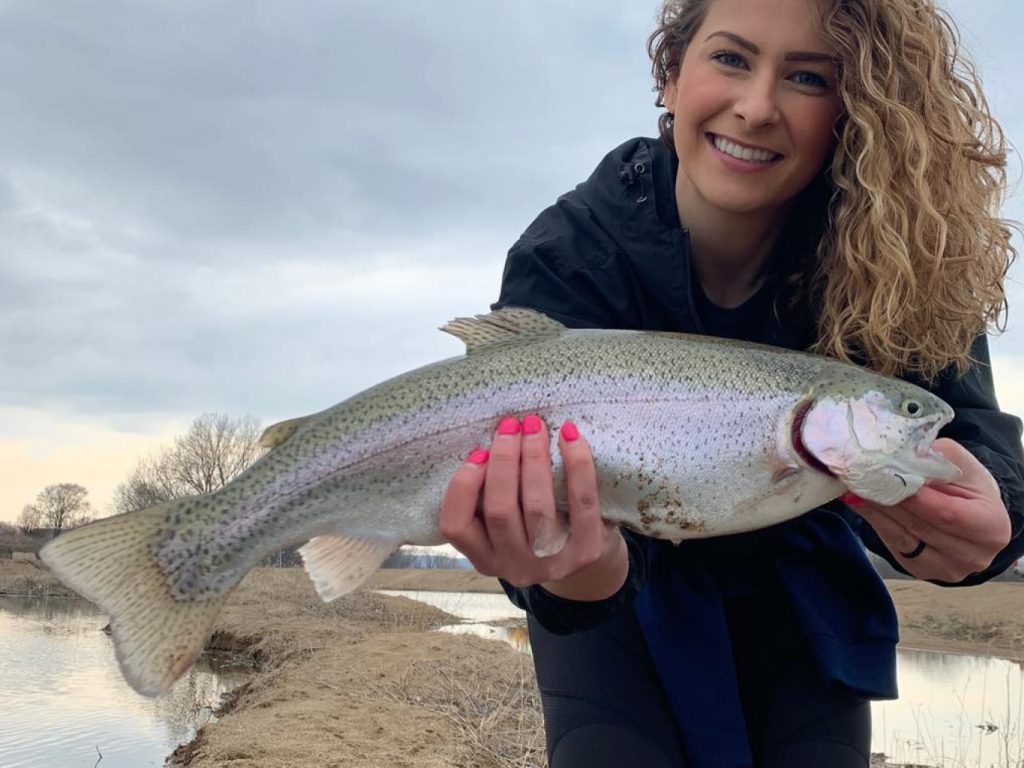
•Rainbow Trout get their name from the beautiful pink or reddish stripe that runs along their sides.
•They prefer cold, highly oxygenated water, with ideal temperatures between 50–60°F.
•In most Midwest ponds, rainbow trout are stocked as a seasonal fishery, thriving through fall, winter, and spring until summer water temperatures become too warm.
•They are extremely visual feeders and readily strike small lures, flies, and bait such as worms, minnows, chicken livers, and corn.
•Rainbow Trout are known for their acrobatic jumps and powerful runs when hooked, making them one of the most exciting fish to catch on light tackle.
•They grow quickly in cool water and commonly reach 12–18 inches in seasonal pond fisheries.
•Many stocked trout are pellet-trained, which helps them adapt quickly to ponds and feeding programs.
•Because they don’t reproduce in most ponds, they are often managed as a put-and-take fishery.
WALLEYE
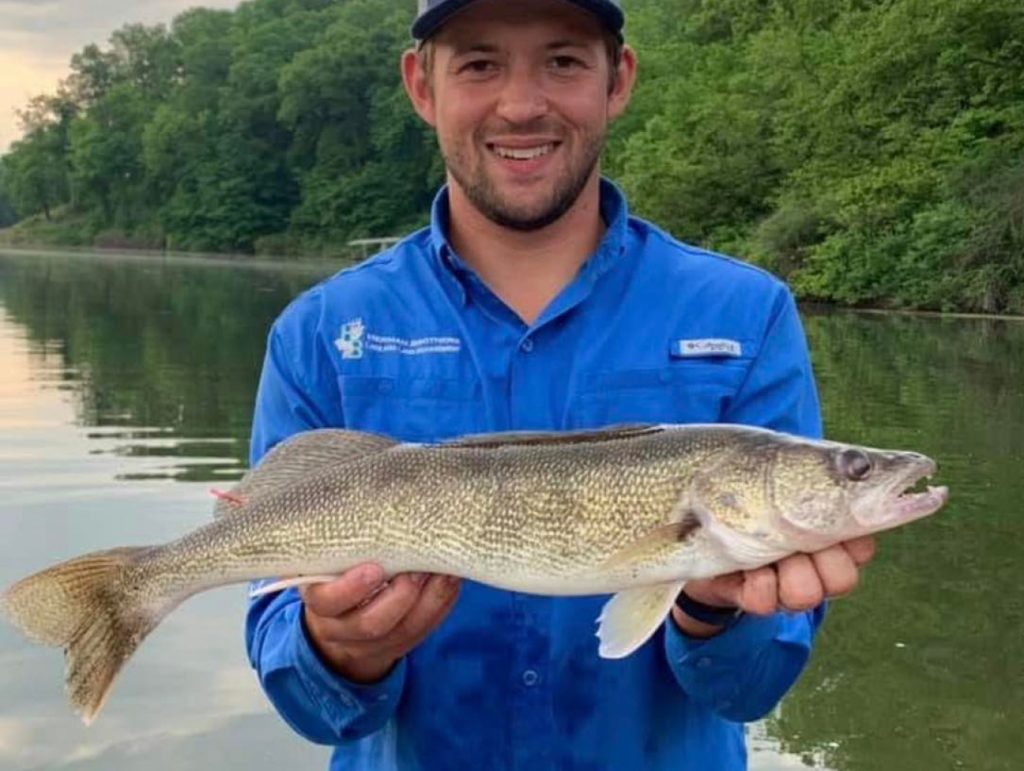
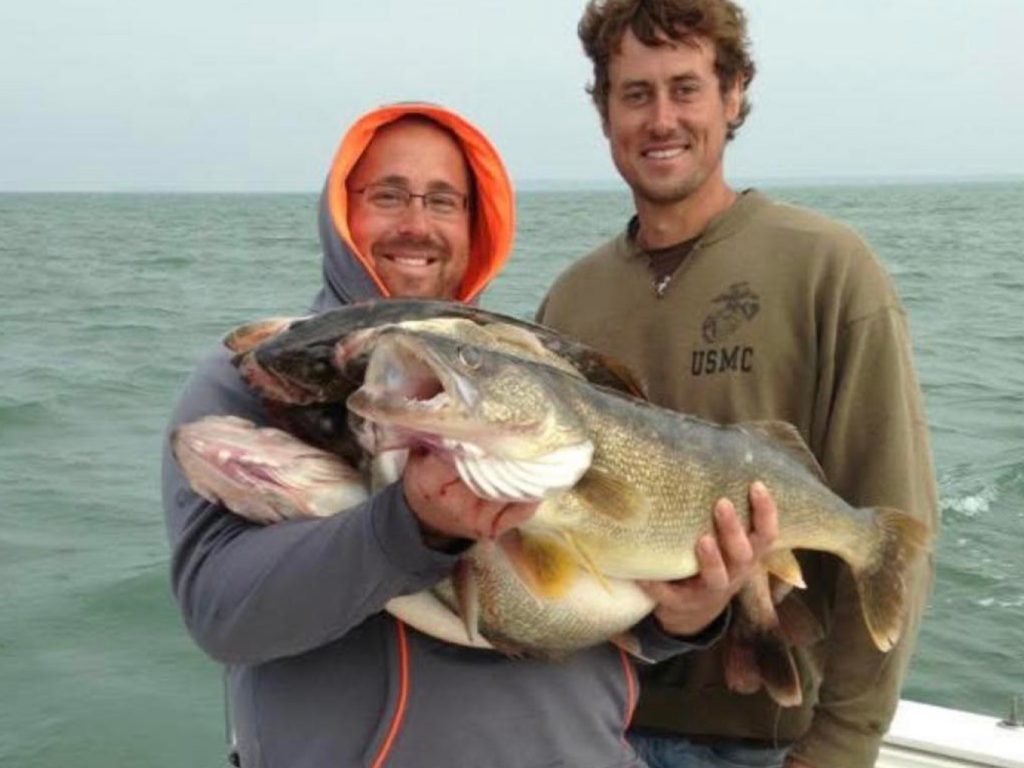
Walleye
Scientific name: Sander vitreus
Stocking availability: Early Spring and Fall
Typical Stocking Rates: 5-25 per acre annually or biannually based on habitat, forage base, and desired harvest.
Why Walleye?
•Walleye are one of the most sought-after sportfish in North America!
•Incredible table fare (arguably the best tasting freshwater fish)
•Excellent bonus predator in private lakes and ponds. They bring a “northwoods” feel and an exciting opportunity for catching something unique.
•Low-light predator = unique fishing opportunities
Management Considerations
•They thrive with strong forage availability.
•They are more pelagic (open water-oriented) than bass.
•Harvest is typically encouraged once they reach eating size. They are a put-and-take fish. Since reproduction is limited in ponds, you maintain control.
•We stock walleyes successfully as far south as Georgia/Kentucky, Southern Illinois, and all over the Midwest. Deep depths are not a must, but good water quality is.
Fun & Interesting Facts
•Their name comes from their reflective, light-sensitive eyes — built for feeding at dawn, dusk, and on cloudy days.
•Walleye have a special eye layer called the tapetum lucidum (same thing deer have), which gives them that glassy glow.
•They prefer cooler water with an ideal range of 65–75°F. But they can tolerate warmer water as long as it carries oxygen.
•They don’t reproduce well or overpopulate in private water, mostly because they don’t guard their eggs or fry. When they can go up a stream and lay eggs away from high concentrations of panfish, their spawning success increases.
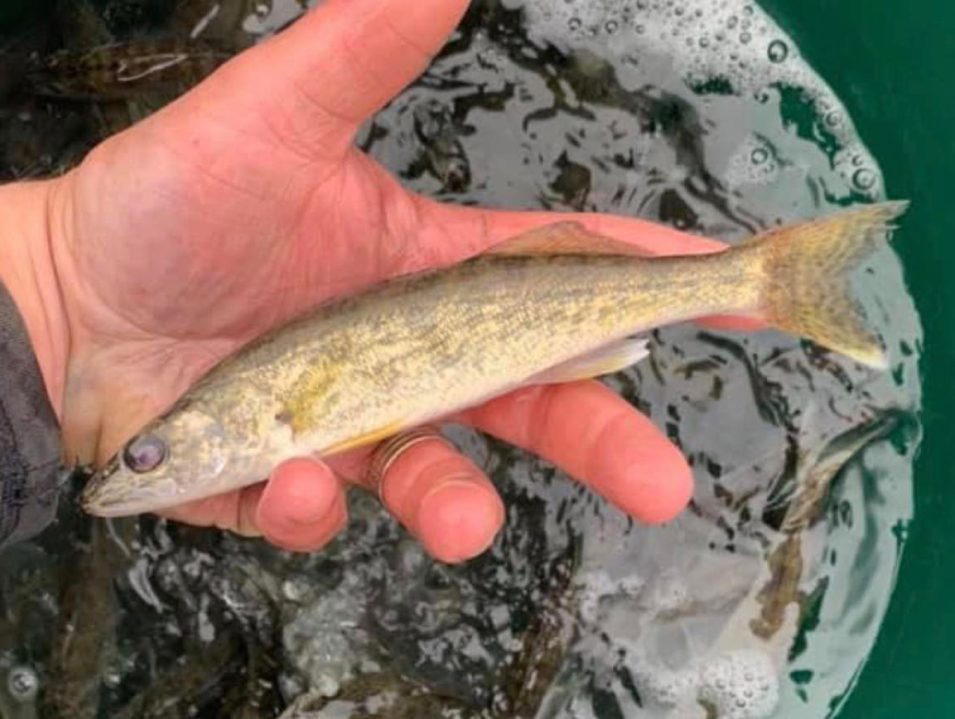
•Typically, they need to be stocked at 5-7”, 6-8”, or 8-10” long to avoid predation, based on the amount and size of predators in the lake or pond already.
•In the right conditions, they grow 18-24 inches in ponds — and even larger up to 30” in lakes and rivers.
Contact our biologists today at 309-693-3255 to learn which stocking program would be the best fit for your lake or pond!